Blog
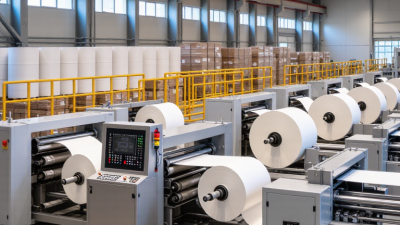
China Best Tissue Paper Machinery Manufacturers
China’s tissue paper industry is expanding alongside a broad paper sector. The China Paper Association’s 2023 annual report recorded 144.05 million tonnes of machine-made paper and paperboard production. That figure covers many grades, not tissue alone, so it should not be mistaken for tissue-machine demand. Still, it signals the scale of the manufacturing base serving mills, converters, and equipment suppliers.
For buyers comparing China Best Tissue Paper Machinery Manufacturers, the key question is how equipment performs on the production floor. Smithers’ report, The Future of Tissue and Hygiene Products to 2027, examines changing product demand and market pressures across tissue and hygiene products. Those shifts make practical machine features important: stable web formation, efficient energy use, fast grade changes, and dependable winding. A tissue line may look impressive in a brochure; operators judge it by consistent reel quality, manageable downtime, and the support available when a component fails.
The details matter. A supplier’s actual strengths depend on machine configuration, raw-material conditions, and service capabilities. Buyers should verify output claims against comparable operating conditions and request references from working mills. That is not enough. Specifications alone cannot show how smoothly a line runs through a difficult shift. This guide introduces manufacturers and evaluation points to help readers make a more evidence-based shortlist, while recognizing that no single supplier suits every mill.
Read more »
 By:Ethan
- November 18, 2026
How to Choose a Tissue Paper Machine in 2026
Choosing a Tissue Paper Machine in 2026 is not a catalogue exercise. It is a mill-floor decision, shaped by furnish, target basis weight, available utilities, and the products customers actually buy. A line that looks impressive in a brochure may struggle with frequent grade changes or limited operator support. Small details matter: the reel diameter, the control-room layout, and how quickly crews can reach wear parts.
For this draft, mill engineer Alex Morgan is a representative expert voice, not a cited interviewee. The guiding principle is: “Choose the machine your mill can run reliably, not merely the one with the highest advertised speed.” That distinction deserves scrutiny. A faster design may raise output, but only when stock preparation, drying capacity, converting, and maintenance can keep pace. Buyers should compare usable production, energy demand, automation, service access, and documented performance on similar grades. Ask for references, trial data, and clear assumptions behind every guarantee.
This guide examines those questions in practical terms. It explains how to match machine configuration with tissue grades, production goals, and site constraints. It also considers supplier experience, lifecycle costs, operator training, and future flexibility. No single specification settles the choice. Real mills are messier than comparison tables suggest, and estimates can miss that. A careful evaluation helps reveal the trade-offs before they become expensive surprises.
Read more »
 By:Oliver
- November 18, 2026
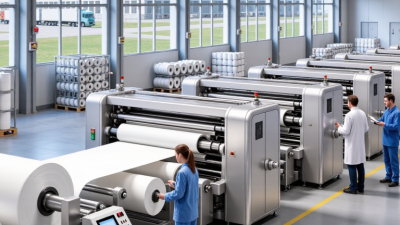
How to Choose a Tissue Making Machine in 2026?
A tissue mill does not buy speed in isolation. It buys saleable tonnes, consistent sheet quality, and hours of dependable operation. In 2026, choosing a Tissue Making Machine means balancing those outcomes against fiber costs, energy use, labor skills, and the grades customers actually order. The details matter: a machine’s advertised capacity means little if frequent grade changes, unstable basis weight, or limited converting capacity slow the line.
Smithers’ industry report, The Future of Tissue Paper to 2029, examines global demand, production, and regional market shifts. Its outlook reinforces a practical point: buyers should assess local demand and product mix before sizing a new line. Review the report’s assumptions alongside your own sales forecasts; market averages cannot predict an individual mill’s orders. Esko Uutela, a respected tissue-market analyst, has studied these demand patterns. A paraphrased buying principle from that market-led perspective is: “Choose capacity for the demand you can serve, not the speed on the brochure.”
Then compare machine concepts against measurable requirements: target speed at saleable quality, furnish flexibility, energy per tonne, water management, changeover time, and service support. Ask suppliers for reference-mill results and clarify how those figures were measured. A test run on paper is not the same as proven performance on your furnish. That distinction is easy to miss.
This guide outlines how to evaluate those trade-offs, verify supplier claims, and build a realistic investment case. The best choice may not be the fastest machine. It should fit the mill you have—and the market you can credibly reach.
Read more »
By:Oliver
- November 18, 2026