China’s tissue paper industry is expanding alongside a broad paper sector. The China Paper Association’s 2023 annual report recorded 144.05 million tonnes of machine-made paper and paperboard production. That figure covers many grades, not tissue alone, so it should not be mistaken for tissue-machine demand. Still, it signals the scale of the manufacturing base serving mills, converters, and equipment suppliers.
For buyers comparing China Best Tissue Paper Machinery Manufacturers, the key question is how equipment performs on the production floor. Smithers’ report, The Future of Tissue and Hygiene Products to 2027, examines changing product demand and market pressures across tissue and hygiene products. Those shifts make practical machine features important: stable web formation, efficient energy use, fast grade changes, and dependable winding. A tissue line may look impressive in a brochure; operators judge it by consistent reel quality, manageable downtime, and the support available when a component fails.
The details matter. A supplier’s actual strengths depend on machine configuration, raw-material conditions, and service capabilities. Buyers should verify output claims against comparable operating conditions and request references from working mills. That is not enough. Specifications alone cannot show how smoothly a line runs through a difficult shift. This guide introduces manufacturers and evaluation points to help readers make a more evidence-based shortlist, while recognizing that no single supplier suits every mill.
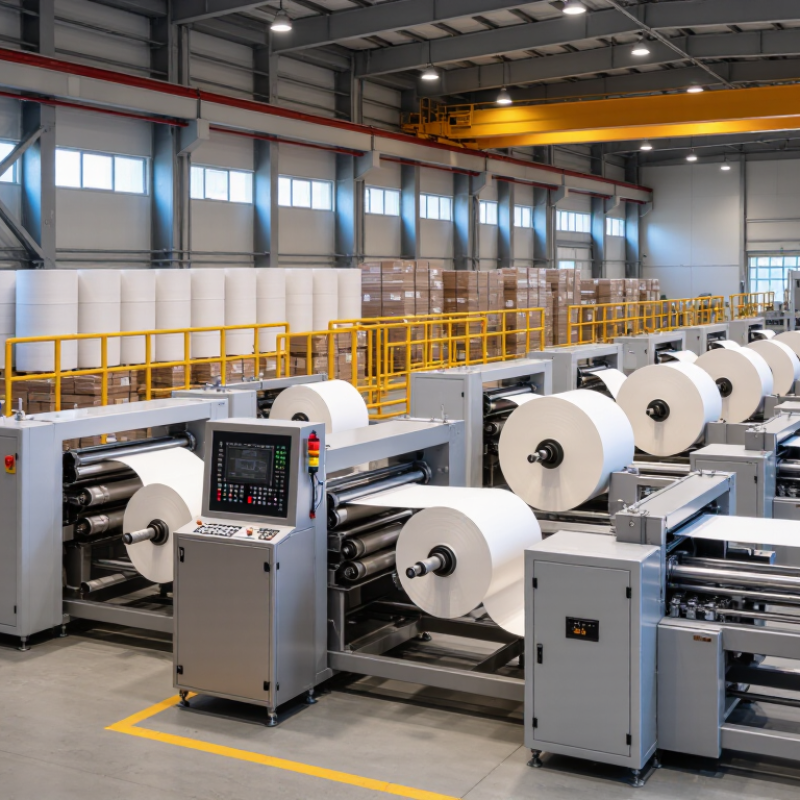
China’s Tissue Paper Machinery Industry and Its Market Structure
China’s tissue paper machinery market is not one uniform supplier pool. It includes complete-line builders, specialist equipment makers, component suppliers, and engineering firms that combine systems for individual mills. Their roles often overlap. One company may supply a rewinder, while another integrates stock preparation, forming, pressing, and drying. Details matter.
The market is shaped by mill size and product mix. Large projects often require high-speed machines, automated controls, and coordinated commissioning. Smaller producers may prioritize flexible lines, manageable installation costs, and access to replacement parts. Buyers compare output, energy use, paper quality, operating stability, and service response—not just the quoted price. A fast machine is not automatically the best fit.
Suppliers also differ in how much of a project they deliver themselves. Some provide near-complete production lines; others rely on partners for controls, pumps, or converting equipment. This can affect lead times and accountability during installation. Public information does not always show where one supplier’s responsibility ends, so buyers should verify the scope in technical documents. The market is clear in broad terms, but less tidy in practice. And that matters. A careful comparison should examine references, commissioning support, and spare-parts availability alongside specifications. Actual capability varies by line design, engineering depth, and after-sales coverage.
FAQS
The market includes complete-line builders, specialist equipment makers, component suppliers, and engineering firms. Their responsibilities can overlap.
Stock-preparation systems use pulpers, refiners, screens, and cleaners. The tissue machine forms and dries the web, often using a Yankee dryer and creping blade.
Rewinders make smaller logs, and perforators set sheet length. Folding machines produce facial tissues or napkins; log saws cut toilet-roll logs.
Compare proposals using the same product range, roll width, target output, and sheet specifications. Ask how operating hours and downtime affect capacity claims.
No. Product mix, changeover time, maintenance, furnish, and operator skill affect real output. A slower line may suit a smaller factory better.
Compare energy and water use, automation, changeover time, and access to wear parts. Ask for a sample maintenance schedule.
Request records from a similar machine configuration. Clarify how acceptance tests measure output, sheet quality, and waste.
Ask who trains operators, how technicians respond, and whether remote troubleshooting is available. Check commissioning support and spare-parts access.
Proposals may use different assumptions, even when their prices look comparable. A polished document can still leave gaps. I would check the details twice.
Conclusion
China’s Tissue Paper Machinery industry serves a broad market, from small-scale producers to large manufacturing operations. Its equipment range can include pulping and preparation systems, tissue paper machines, converting lines, and packaging equipment, with different configurations suited to varying production needs. Understanding how these machine types fit together helps buyers identify a suitable setup and plan for efficient operation.
When evaluating manufacturers, buyers can compare product specialties, engineering capabilities, customization options, production capacity, energy use, quality control, and after-sales support. It is also useful to review technical documentation, installation and training arrangements, spare-parts availability, and the supplier’s experience with similar projects. By assessing these factors alongside budget and long-term operating requirements, businesses can make a more informed comparison and select machinery that aligns with their goals.
