Direct Factory Machinery Directory
Featured Tissue Converting & Packaging Systems
Engineered for high web speed, mechanical stability, automated tension control, and compliance with North American manufacturing standards.
Industry Technical Whitepaper
Modernizing Tissue Converting & Pulp Mill Engineering in Southern California
An engineering analysis on mechanical efficiency, tension sync, and supply chain dynamics for paper converters in Santa Ana and greater Orange County.
The sanitary paper manufacturing and tissue converting landscape in Southern California—specifically centered around the Santa Ana industrial corridor—is undergoing a rapid technological evolution. Driven by soaring regional commercial demand across food service, hospitality, medical hygiene, and eco-conscious retail sectors, local tissue converters face a dual challenge: maximizing throughput speed while adhering to stringent California environmental standards and mitigating elevated regional labor overhead. Achieving profitable converting performance requires a shift from semi-automated, mechanically linked machinery to fully automated, multi-servo synchronized converting and packaging platforms.
Technical Information Gain: Modern tissue converting efficiency is no longer measured solely by mechanical linear speed (meters per minute), but by Overall Equipment Effectiveness (OEE), automatic web-tension variance recovery (<0.5% deviation), dynamic steel-to-rubber embossing preservation, and rapid changeover times between varying ply counts and sheet dimensions.
1. Advanced Web Engineering and Tension Control Systems
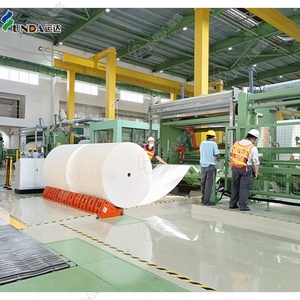
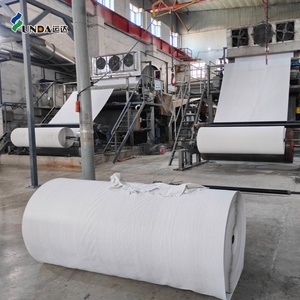
Unwinding virgin pulp or recycled waste paper rolls introduces dynamic rotational momentum changes as the parent reel diameter decreases. Our modern tissue converting systems incorporate pneumatic expansion unwinding stands outfitted with closed-loop tension control load cells and electro-magnetic braking systems. As the parent roll depletes from 2200mm diameter down to the core, servo drives continuously compute inertia curves to maintain uniform web tension, preventing web breaks on lightweight 13–18 GSM tissue sheets.
2. Precision Embossing and Interfolding Dynamics
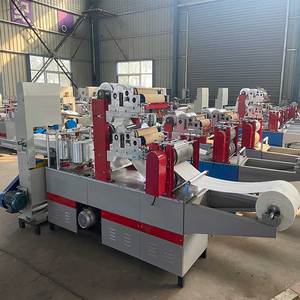
Whether producing commercial napkin stock or premium facial tissue, embossing functionality defines both tactile bulk and liquid absorption capacity. Our machines utilize precision-ground CNC steel-to-rubber or steel-to-steel embossing cylinders with micro-embossing and nested point-to-point configurations. Downstream from the embossing station, high-speed vacuum interfolding drums utilize synchronized rotary claws and air-jet assistance to execute continuous V-fold, Z-fold, or C-fold patterns without paper dust accumulation, running reliably at speeds exceeding 800 to 2,000 sheets per minute per lane.
30+
Years Industry Expertise
160+
Export Destination Countries
50+
National Engineering Patents
10k+
Sqm Production Footprint
Regional Focus
Localized Application Scenarios across Santa Ana & Orange County
How specialized converting machinery powers distinct commercial and industrial ecosystems throughout Southern California.
1. High-Density Commercial Food Service & Hospitality
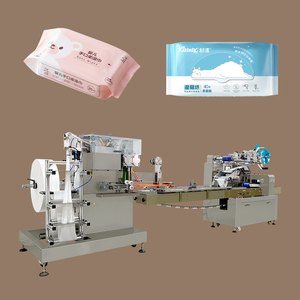
Santa Ana's booming restaurant industry, combined with proximity to major Anaheim entertainment hubs, generates constant demand for custom-printed 1-ply and 2-ply dinner napkins, dispenser napkins, and single-sachet wet wipes. Utilizing machines like the 250x250 High Speed Napkin Maker Machine allows local converters to supply high-density, custom-embossed logo napkins directly to regional food service distributors with quick turnaround cycles.
2. Healthcare, Cleanroom & Sanitization Facilities
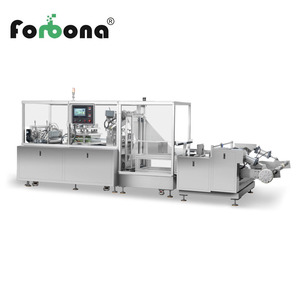
With Orange County’s expanding biomedical, outpatient care, and life science sectors, demand for single-sachet disinfectant wipes and non-woven towels is at an all-time high. Fully automated machines such as the Forbona FBN-100AP Wet Wipe Machine enable local producers to manufacture hermetically sealed, liquid-dosed wet tissue sachets under sterile, dust-free conditions required for medical and cleanroom applications.
3. Industrial Away-From-Home (AFH) & Logistics Hubs
The vast warehousing and distribution facilities along the I-5 and CA-55 freeways rely heavily on Away-From-Home (AFH) tissue products, including jumbo roll tissue (JRT), hardwound roll towels, and multi-fold hand towels. High-capacity rewinding lines produce tightly wound, high-footage rolls engineered for commercial dispensers, optimizing pallet density for regional truckload distribution.
4. Eco-Friendly Private Label Converting for Retail
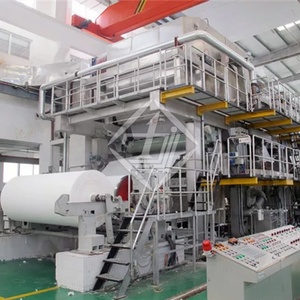
California consumers prioritize environmental sustainability, driving retail demand toward 100% Post-Consumer Recycled (PCR) tissue, bamboo pulp, and unbleached fiber products. Complete systems such as the Yunda 100TPD Turnkey Paper Mill and waste paper pulp systems empower Santa Ana manufacturers to run sustainable raw materials with zero quality sacrifice on softness, strength, or absorption.
Market Dynamics & Trends
Key Converting Trends Shaping the Southern California Market
Strategic shift toward zero-waste converting, electricity efficiency, and servo-driven labor offset.
Energy Efficiency & Title 24 Compliance
With California enforcing strict energy standards and high electricity rates, converters are eliminating outdated line-shaft mechanical equipment. Modern lines integrate Variable Frequency Drives (VFDs) and regenerative servo motors that reduce electricity consumption by up to 25% per converted ton.
Automation to Offset SoCal Labor Costs
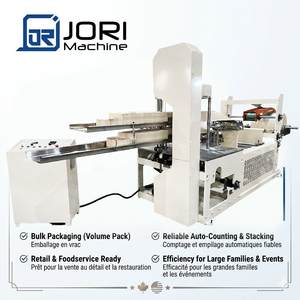
High hourly wages in the Greater Los Angeles and Orange County areas make labor-intensive manual packing unviable. Automated log saw feeding, robotic arm pick-and-place bundlers, and auto-wrapper integrations allow a single operator team to supervise complete production lines.
Closed-Loop Waste Recycling & Zero Dust
SCAQMD (South Coast Air Quality Management District) guidelines encourage dust-free industrial operating environments. Advanced converting machines come standard with localized trim exhaust ducts and dust suction collectors to protect air quality and maximize raw material reuse.
Engineering Benchmarks
Converting Equipment Technical Capabilities
Compare machinery parameters across folding, rewinding, wet wipe processing, and paper mill setups.
| Equipment Category | Target Output Capacity | Raw Material Compatibility | Drive System Integration | Primary Industrial Use Case |
|---|---|---|---|---|
| Single Sachet Wet Wipe Machine | 100–260 packs/min | Spunlace non-woven, airlaid paper, 30–80 GSM | PLC Control + Servo Film Dragging | Hospitality, medical wipes, restaurant dining sachets |
| High-Speed Napkin Folder Line | 800–2500 sheets/min | 100% Virgin wood pulp, recycled paper, 14–22 GSM | Frequency Control + Synchronous Belt Drive | Commercial dining, custom embossed brand napkins |
| Automatic Roll Tissue Rewinder Line | 180–300 meters/min | Virgin tissue, bamboo pulp, 13–20 GSM (2-4 ply) | Multi-Servo Motion Controller (Siemens/Yaskawa) | Retail toilet paper rolls, kitchen towels, jumbo rolls |
| Turnkey Paper Mill Plant Project | 30–100 Tons/Day | Waste paper pulp, de-inked pulp, virgin wood pulp | SCADA Distributed Control System (DCS) | Complete tissue mother roll manufacturing mill |
Why Partner With Us
Andina Heavy Tissue Machinery Manufacturing Advantages
Over three decades of precision machine building, global supply chain leadership, and comprehensive technical service.
30+ Years & 3 Manufacturing Bases
Founded in 1993, Andina Heavy Tissue Machinery operates three state-of-the-art production bases in Shanghai, Foshan, and Chengdu, totaling over 10,000 square meters of CNC machining, assembly, and testing space.
ISO 9001, CE & 50+ Patents
Our design and manufacturing systems are strictly ISO 9001 quality certified. Every machine shipped to the US market carries CE and electrical compliance, backed by more than 50 national invention and utility patents.
IoT Smart Remote Telemetry
Integrated IoT diagnostic modules allow our engineering team to provide remote software monitoring, troubleshooting assistance, and performance optimization for plants operating in Santa Ana and globally.
Procurement Guide
Frequently Asked Questions for Santa Ana Tissue Buyers
Clear answers regarding shipping, electrical specs, local compliance, and after-sales support.
How do your tissue converting machines conform to US electrical standards (UL, NEC, 480V 60Hz)?
All converting lines destined for Santa Ana and North American plants are custom wired to match US three-phase power specifications (e.g., 220V/480V at 60Hz). Electrical control cabinets feature UL-listed components, Schneider/Siemens contactors, overload protections, and lock-out/tag-out safety switches compliant with OSHA ANSI B11 safety guidelines.
What is the typical ocean freight shipping logistics route to Santa Ana, CA?
Machinery shipments are securely export-packed in vacuum-sealed moisture-proof wraps and heavy-duty steel-frame wooden crates. Freight is shipped directly to the Port of Long Beach (POLB) or Port of Los Angeles (POLA). From the port terminal, containerized trucks transport equipment directly to your facility in Santa Ana or surrounding Orange County industrial zones within 45 to 60 minutes of customs clearance.
Can your napkin and rewinding machines run 100% bamboo or non-wood sustainable pulps?
Yes. Our tension control and slitting/folding systems are designed to process diverse fiber lengths, including 100% post-consumer recycled paper, unbleached kraft, agricultural straw pulp, and rapidly renewable bamboo pulp without paper tear or excessive dust build-up.
How is post-installation field service, operator training, and spare parts delivered?
We provide comprehensive installation manuals, video documentation, and optional on-site dispatch of certified field application engineers to oversee machine positioning, wiring, calibration, and team training. Critical wear parts (such as circular log saw blades, perforation knives, and timing belts) are standardized and readily available for overnight dispatch.
What floor space, pneumatic air, and power infrastructure are required for a standard line?
A standalone napkin or wet wipe line typically requires a footprint of 15m x 3m with a clear ceiling height of 3m, 15-30 kW connected electrical load, and 0.6–0.8 MPa compressed air supply. Complete automatic toilet paper lines or multi-lane facial tissue lines require expanded layout planning, which our engineering team delivers via custom 3D CAD facility drawings.
What is the expected Return on Investment (ROI) timeline for automated tissue converting equipment?
For converting operations operating in high-labor-cost regions like California, upgrading from manual or semi-automated converting to full servo automation yields an average ROI within 12 to 18 months, driven by reduced scrap loss (<1.5%), lower labor headcount, and higher output capacity.
Ready to Upgrade Your Tissue Manufacturing Operations in Santa Ana?
Consult directly with our senior application engineers to receive custom line layouts, production capacity estimates, and factory-direct equipment quotations tailored to your exact product specifications.