Featured Automated Packaging & Converting Systems
Synchronized tissue machinery and high-speed secondary cartoning solutions tailored for commercial paper converters and manufacturing facilities in the Greater Toronto Area.
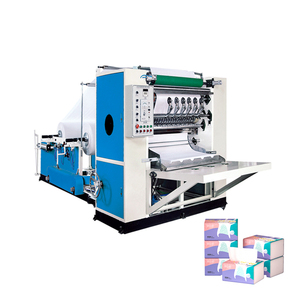
Full Automatic 2 Line Facial Tissue Paper Machine Production Line with Box and Plastic Bag Packing Machine
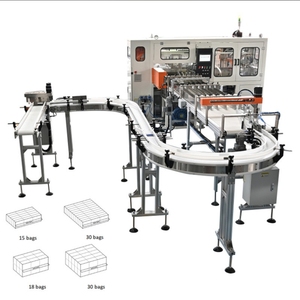
ZD-C25B Full Automatic Factory Direct Sales Toilet Paper Making Machine Tissue Production Line
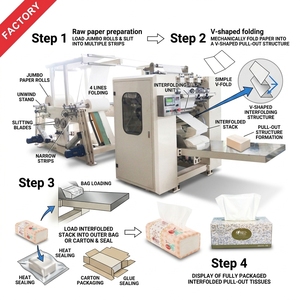
Facial Tissue Machine Tissue and Toilet Paper Machine Facial Tissue Paper Making Machine
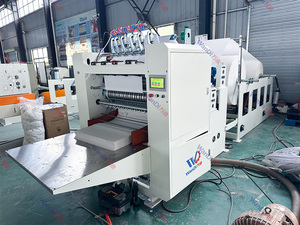
Fully Automatic Pocket Tissue Handkerchief Napkin Making Machine Manufacturing Plant
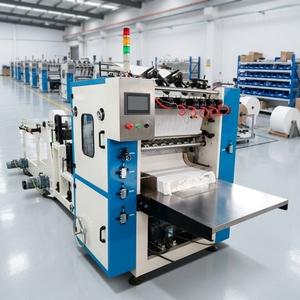
Facial tissue machine and disposable face towel machine production line, fully automatic processing
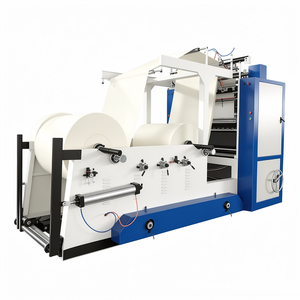
Small toilet paper and facial tissue processing equipment, tissue folding machine
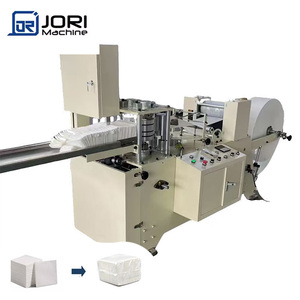
High Speed Fully Automatic Tissue Paper Napkin Making Machine with Embossing Folding System
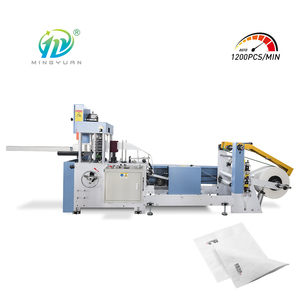
Factory Sale Low Price Tissue Paper Making Machine, Automatic Paper Napkin Machine/toilet Paper Machine
Full Servo Kinematic Architecture for Modern Cartoning Lines
Analyzing the shift from mechanical cam-driven linkages to multi-axis synchronized electronic motion control in high-speed secondary packaging operations.
Multi-Axis Independent Servo Drive Systems
Traditional cartoning equipment relied heavily on mechanical cams, main drive shafts, and complex gear trains to synchronize carton opening, product insertion, and flap tucking. These mechanical systems present distinct operational bottlenecks: physical wear, lengthy changeover times (often exceeding 3 to 4 hours), and acoustic noise exceeding 82 dBA at high throughput speeds.
Our Full Servo Cartoning Machine series replaces mechanical drives with an integrated multi-axis motion control framework. Each critical station—including carton erect rotary pick-and-place, flight chain indexing, servo pusher insertion, tuck-in mechanisms, and hot-melt glue applicators—is driven by independent AC servo motors linked via high-speed EtherCAT real-time industrial fieldbus communication.
Dynamic Parameter Calibration & Memory Recipe
For high-mix packaging operations in Southern Ontario's manufacturing sector, downtime directly degrades Overall Equipment Effectiveness (OEE). Servo-driven technology eliminates mechanical micro-adjustments. Product changeovers are accomplished through a human-machine interface (HMI) multi-touch panel storing up to 500 digital recipes.
Upon recipe selection, servo drives automatically position linear guides, carton magazine height, infeed timing screws, and push stroke limits to micro-metric precision (±0.1 mm). This reduces recipe changeover times from several hours down to under 12 minutes, enabling efficient short-run production for private-label tissue and consumer product packaging lines.
Engineering Solutions Designed for the Toronto & Ontario Industrial Landscape
Addressing supply chain parameters, cold-climate board variations, regional labor economics, and Canadian electrical safety compliance.
Ontario ESA & CSA C22.2 Electrical Standards
Packaging equipment exported to Ontario must comply with strict electrical safety codes enforced by the Electrical Safety Authority (ESA) and Ontario Regulation 851 (Industrial Establishments). Our machinery is pre-engineered to meet CSA C22.2 No. 14 / UL 508A standard control panel requirements, utilizing premium Allen-Bradley (Rockwell Automation) or Siemens PLC architectures, safe torque off (STO) safety relays, and dual-channel E-stop circuits for seamless field approval in Toronto, Mississauga, and Brampton plants.
Thermal & Humidity Substrate Compensation
Toronto manufacturing environments experience seasonal temperature shifts, ranging from cold winter warehouse conditions to humid summers. These fluctuations alter paperboard elasticity, score-line stiffness, and hot-melt glue setting times. Our servo cartoners feature dynamic torque monitoring on rotary carton openers and closed-loop Nordson glue temperature compensation, maintaining reliable carton erection even when processing high-recycled-content FSC corrugated stocks in variable ambient conditions.
GTA Supply Chain & Labor Optimization
With industrial wage rates rising across Peel Region and York Region, manual carton loading and semi-automatic packing represent significant operational overhead. Integrating full servo automated cartoning lines reduces direct labor allocation on secondary packaging lines by up to 75%, while achieving sustained continuous production speeds from 80 up to 300 cartons per minute depending on product configuration (facial tissue, napkins, hygiene goods, or industrial products).
Kinematic Performance Comparison Matrix
Quantifiable engineering parameters evaluating traditional mechanical cartoners versus full servo electronic systems.
| Performance Metric | Conventional Mechanical Cam Cartoner | Andina Full Servo Automatic Cartoning Line | Operational Advantage |
|---|---|---|---|
| Drive Mechanism | Main motor, line shafts, mechanical cams & chains | Multi-axis independent AC servo drives (EtherCAT) | Zero mechanical cam backlash; reduced physical component wear |
| Maximum Line Speed | 60 - 100 cartons / minute | 150 - 300 cartons / minute (continuous motion) | Up to 200% throughput increase for high-volume manufacturing |
| Format Changeover Time | 120 - 240 minutes (manual mechanical adjustment) | 8 - 15 minutes (HMI digital recipe + motorized guides) | Significantly minimized line downtime during batch changes |
| Carton Opening Reliability | Single vacuum cup pull (susceptible to jams) | Rotary dual-arm servo positive opening system | Over 99.8% erection success on rigid or recycled board |
| Noise Emission Level | 78 - 84 dBA at rated speed | < 68 dBA silent servo operation | Enhanced shop-floor ergonomics conforming to Canadian OHS standards |
| Control Panel Compliance | Standard IEC wiring (requires regional retrofitting) | Pre-certified CSA C22.2 / UL 508A compliant electrical enclosures | Rapid installation approval by Ontario ESA inspectors |
Secondary Packaging Integration for Tissue & Hygiene Products
Secondary cartoning plays a critical protective and presentation role in tissue paper manufacturing. Tissue products—such as boxed facial tissues, soft-packed pocket handkerchiefs, flat-fold table napkins, and sanitary hygiene pads—require gentle handling to preserve product loft, folding geometry, and poly-wrapping integrity.
Our servo cartoning machines integrate synchronized bucket conveyors and star-wheel infeed mechanisms. Photocell sensor arrays continuously track incoming product alignment. If an incomplete stack or misaligned tissue bundle is detected, the servo system executes an automatic single-pack bypass, preventing jams inside the carton loading zone and guaranteeing zero-defect carton seal outputs.
Packaging styles supported include reverse-tuck cartons, straight-tuck cartons, tamper-evident tear strip cartons, and hot-melt adhesive sealed side flaps for heavy-duty commercial tissue products.
Predictive Maintenance & Industry 4.0 Telemetry
For operations managers overseeing production units in Toronto's industrial zones, remote visibility into machine metrics is paramount. Andina's servo cartoning solutions feature an integrated Industry 4.0 IoT telemetry stack:
- Real-Time OEE Dashboard: Continuously monitors availability, performance speed, and yield quality rates.
- Vibration & Thermal Sensor Diagnostics: Detects bearing wear or servo overload prior to mechanical failure.
- Remote VPN Field Support: Enables our engineering specialists in Shanghai to perform PLC program updates and sensor diagnostics directly over encrypted networks, drastically shortening mean time to repair (MTTR).
- Automated Consumable Tracking: Monitors hot-melt adhesive usage and vacuum filter differential pressures to streamline preventative maintenance schedules.
Why Global Converters & Toronto Importers Partner with Andina
Three decades of dedicated machinery manufacturing, vertical CNC integration, and worldwide field support infrastructure.
3 Integrated Production Facilities
Established in 1993, Andina Heavy Tissue Machinery S.A. operates over 10,000 square meters of specialized manufacturing space across three production bases in Shanghai, Foshan, and Chengdu. Housing high-precision multi-axis CNC machining centers, flame cutting stations, and electrical assembly floors, we retain strict quality control over every structural frame and milled mechanical linkage.
Rigorous ISO & CE Quality Protocol
Holding over 50 national invention and utility patents, our equipment carries official CE certification and operates under an ISO 9001 certified quality management framework. Every machine undergoes a comprehensive 72-hour continuous dynamic run with actual tissue and paperboard substrates during Factory Acceptance Testing (FAT) prior to ocean container loading.
Turnkey Supply & Commissioning
We provide full-lifecycle technical support to Canadian buyers: initial plant footprint layout drawing, power and pneumatic utility sizing, custom line synchronization, ocean logistics handling to the Port of Montreal or Toronto intermodal terminals, on-site commissioning by field engineers, and comprehensive operator training programs.
Frequently Asked Questions for Toronto Machinery Buyers
Addressing standard technical, regulatory, and logistics queries from plant engineers and procurement officials in Ontario.
Q: How do your full servo cartoning machines comply with Ontario Electrical Safety Authority (ESA) regulations?
Our export machinery destined for Ontario can be configured with CSA C22.2 No. 14 / UL 508A certified electrical panels, standard North American brand electrical components (Siemens, Allen-Bradley, Schneider), standard wire color coding, grounded sub-panels, and mandatory emergency stop safety relays. This ensures seamless field approval during local ESA or SPE-1000 inspections upon arrival at your Toronto facility.
Q: Can the machine handle variations in Canadian paperboard and recycled corrugated stock?
Yes. Our full servo cartoning machines feature adjustable dual vacuum rotary opening arms that securely grip and square up cartons even when handling recycled SBS (Solid Bleached Sulfate), virgin paperboard, or micro-flute corrugated cardboard. Torque limits on servo rotary mechanisms prevent carton crushing or tearing during high-humidity seasonal variations.
Q: What is the typical lead time and shipping pathway for delivery to Toronto, Ontario?
Standard manufacturing time is 45 to 60 days following final layout sign-off and FAT approval. Freight is typically routed via ocean container shipping to Canadian ports (such as Montreal or Vancouver), followed by direct rail connection to Toronto CN/CP intermodal terminals. Total door-to-door transit time generally averages 30 to 40 days.
Q: What local voltage specifications do you support for the Canadian power grid?
We configure the main power transformers and servo drive power units according to your specific plant requirements in North America. Standard configurations include 575V 3-Phase 60Hz (common in Ontario industrial plants) or 480V 3-Phase 60Hz, step-down control power at 24VDC, eliminating the need for external voltage converters.
Q: Are your cartoning machines capable of running both tuck-in closure and hot-melt glue sealing?
Yes. We supply hybrid or dedicated closure modules. The machine can be equipped with mechanical tuck-in flap units for standard recloseable retail boxes, or integrated Nordson hot-melt glue applicator systems for tamper-evident sealed cartons. System changes can be saved within the PLC touch-screen user interface.
Q: How is after-sales spare parts and diagnostic support managed remotely?
Each machine includes built-in secure VPN industrial routers for remote online debugging. If your line experiences a software or drive fault, our field support engineers connect securely to diagnose PLC I/O status in real-time. Standard mechanical parts (bearings, timing belts, pneumatic cylinders) utilize global brands (Festo, SKF, SMC), while proprietary replacement parts are shipped via express air freight directly to Toronto within 3 to 5 business days.
Optimize Your Packaging Throughput in Toronto
Consult with our senior application engineers to receive a tailored line layout, OEE estimate, and technical proposal for full servo cartoning automation.
Get a Quote