Featured Tissue Converting & Servo Packaging Machinery
Engineered by Andina Heavy Tissue Machinery S.A. for maximum uptime, energy efficiency, and rapid format changeover.
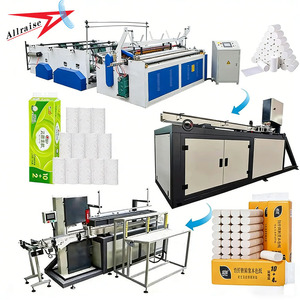
Fully Automatic Toilet Paper Embossed Rewinding Slitting Packaging Machine
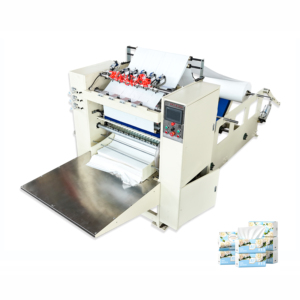
Automatic 3 Lines Facial Tissue Drawing Folding Making Machine
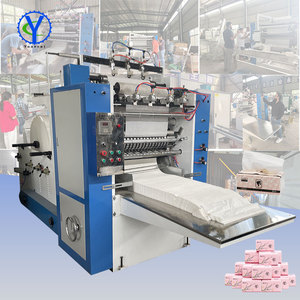
Customized Logo Tissue Paper Production Line Machines
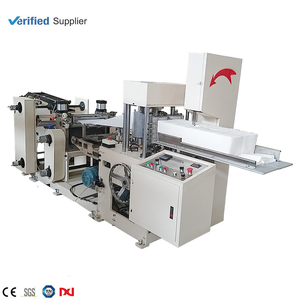
Tissue Making Machine Paper Manufacturing Machine
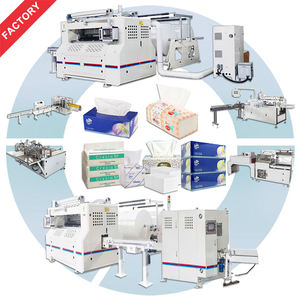
Fully Automatic High-Efficiency Tissue Packing Production Line
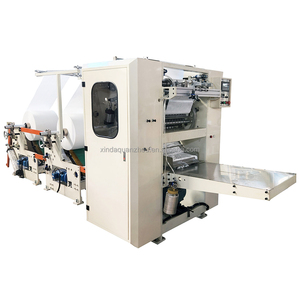
Full Automatic V Fold Facial Tissue Paper Making Machine
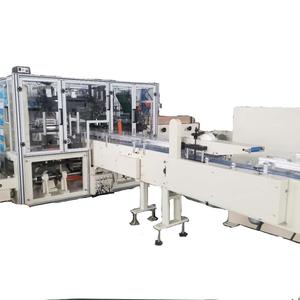
High Speed Automatic Tissue Paper Packing Machine
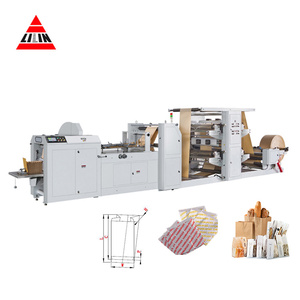
Toilet Tissue Paper Making Machine v Fold Production Line
Engineering High-Speed Cartoning Automation for the Brazilian Tissue Sector
The Latin American tissue paper and fast-moving consumer goods (FMCG) market is undergoing a seismic shift toward automation, operational safety, and sustainable secondary packaging. As South America’s industrial powerhouse, Brazil represents over 42% of LATAM’s total tissue converting capacity. To remain competitive against rising raw material costs, local converters in industrial hubs across São Paulo, Santa Catarina, Minas Gerais, and Paraná are rapidly replacing legacy mechanical push-cartoners with next-generation multi-axis full servo cartoning machines.
This technical engineering guide, published by Andina Heavy Tissue Machinery S.A., provides plant managers, automation project directors, and procurement teams with a complete roadmap for deploying high-speed end-load, side-load, and top-load cartoning equipment tailored to Brazilian operating conditions—incorporating strict NR-12 machine safety compliance, tropicalized IP65/IP67 electrical enclosures, and high-efficiency motion profiles.
1. Kinematic Superiority: Full Servo vs. Traditional Mechanical Linkage Cartoners
Conventional cartoning machines relied heavily on mechanical cams, chain drives, and pneumatic indexing units. While functionally adequate for legacy slow-speed operations, mechanical systems suffer from high wear rates, excessive maintenance downtime, loud decibel emissions, and long format changeover times (often exceeding 3 to 4 hours per SKU shift). In contrast, modern full servo cartoning machines utilize individual direct-drive brushless servo motors mapped across all critical kinetic axes.
Multi-Axis Synchronization
Driven by Siemens SIMOTION or Schneider PacDrive 3 controllers. Electronic camming replaces mechanical cams for zero backlash and vibration-free motion.
- Dynamic acceleration curves
- Automatic product alignment
- Elimination of mechanical clutch wear
Rapid SKU Changeover
Digitally saved recipes on the HMI enable automated servo motor positioning for carton height, width, and tuck length in under 12 minutes.
- Tool-less guide rail adjustment
- Pre-programmed recipe storage
- Minimal operator intervention
Energy & OEE Optimization
Regenerative power braking units return kinetic energy to the local grid, lowering power consumption by up to 34% compared to pneumatic systems.
- Low heat generation
- 98.5% Operational Efficiency
- Real-time energy telemetry
2. Full Servo Cartoning Machine Technical Specifications Matrix
To assist Brazilian engineering directors in sizing equipment for their plant layouts, the following specification table details the key performance parameters of our flagship industrial cartoning series:
| Performance Parameter | Standard Servo Series (AS-120) | High-Speed Servo Series (HS-250) |
|---|---|---|
| Maximum Output Speed | Up to 120 cartons / min | Up to 250 cartons / min |
| Motion Control Architecture | 8-Axis Full Servo (Yaskawa / Delta) | 14-Axis Full Servo (Siemens / Schneider) |
| Carton Size Range (L x W x H) | (100-280) x (80-200) x (30-120) mm | (120-320) x (90-220) x (40-140) mm |
| Box Closure Mechanism | Hot-Melt Glue / Mechanical Tuck-in | Nordson Hot-Melt Spray / Tuck-in Dual |
| Carton Paperboard Grammage | 250 – 450 g/m² (Corrugated E/F flute) | 230 – 500 g/m² (Duplex / Triplex Board) |
| Electrical Voltage (Brazil Standard) | 380V / 440V, 3-Phase, 60Hz | 380V / 440V, 3-Phase, 60Hz |
| Compressed Air Requirement | 0.6 MPa, 180 L/min | 0.6 – 0.8 MPa, 260 L/min |
| Safety Compliance Standard | NR-12 (Brazil) / CE Directive 2006/42/EC | NR-12 (Brazil) / CE Directive 2006/42/EC |
3. Localized Application Scenarios Across the Brazilian Industrial Belt
Brazil’s geographic and economic diverse market creates distinct operational challenges for tissue converting plants. A cartoning system designed for European conditions often struggles when deployed in tropical Latin American facilities without dedicated localization.
A. High Humidity Resistance in Manaus & Coastal Santos Regions: Coastal and Amazonian processing plants endure ambient humidity levels exceeding 85%. Paperboard cartons absorb atmospheric moisture, reducing structural rigidity by up to 30%. Andina’s full servo cartoning machines feature customized vacuum-assisted mechanical feeder arms with positive dual-suction cups and high-torque rotary pickup mechanisms, ensuring reliable carton erection even with moisture-softened carton blanks.
B. E-Commerce & Retail Expansion in São Paulo: With the booming growth of e-commerce delivery networks across Greater São Paulo (Mercado Livre, Amazon Brasil, Magalu), Brazilian tissue brands are increasingly adopting retail-ready display cartons (RRC) and multi-pack pocket tissue boxes. Our cartoning systems integrate seamlessly with upstream V-fold facial tissue drawing machines and automatic log saws, pushing wrapped tissues directly into auto-erected display boxes with 100% accuracy.
C. Flexographic Print Alignment & Premium Packaging: Brazilian consumers are demanding higher quality facial tissue boxes with metallic foils, matte coatings, and customized brand logos. Servo-controlled flight chains ensure zero scratching or friction scuffing on pre-printed luxury cartons during high-speed insertion.
4. Key Trends Shaping the Brazilian Tissue Packaging Market
Strategic purchasing managers in Brazil must evaluate capital equipment investments against long-term macroeconomic trends. Industry data highlights three key drivers defining the current market:
Plastic-to-Paper Mandates
Driven by ESG corporate mandates, top-tier Brazilian brands are replacing single-use polybags with 100% recyclable virgin or recycled paperboard cartons.
Rising Labor & Power Costs
Electricity tariffs in Brazil require energy-thrifty machinery. Direct-drive servo motors reduce kVA load demands significantly compared to fixed-speed motors.
Smart Factory & IoT Integration
Brazilian producers are adopting Industry 4.0 telemetry. Our cartoner controls integrate OPC-UA protocols for remote diagnostics from our engineering centers.
5. Strict NR-12 Safety Compliance for Importing Machinery into Brazil
One of the largest hurdles international buyers face when sourcing machinery into Brazil is non-compliance with Norma Regulamentadora 12 (NR-12). The Brazilian Ministry of Labor enforces rigorous safety protocols. Operating non-compliant imported machinery risk heavy regulatory fines, operational halts, or custom clearance rejections.
At Andina Heavy Tissue Machinery S.A., all full servo cartoning machines destined for Brazil undergo full factory pre-engineering for NR-12 compliance:
- Dual-Channel Safety Relays & Category 4 PLCs: Emergency stop circuits utilize redundant, self-monitoring safety logic (e.g., Sick or Banner safety controllers).
- Physical Safety Interlocks: Tamper-proof safety switches on all access doors immediately de-energize servo drives upon opening.
- Laser Light Curtains: Infeed and outfeed zones are protected by optical light curtains, preventing operator limb intrusion during high-speed cycle runs.
- Portuguese HMI & Documentation: All operator interfaces, safety warnings, wiring diagrams, and technical manuals are delivered natively in Brazilian Portuguese (PT-BR).
6. Corporate Authority: Why Leading Brazilian Converters Partner with Andina
Selecting a machinery supplier is a long-term strategic partnership. Founded in 1993, Andina Heavy Tissue Machinery S.A. brings over three decades of engineering excellence, holding ISO 9001 certification, CE compliance, and over 50 national invention patents.
In-House CNC Machining
We do not outsource core mechanical components. Over 85% of structural chassis, gearboxes, and servo shafts are milled in-house across our CNC centers in Shanghai, Foshan, and Chengdu.
Pre-Shipment Testing (FAT)
Every full servo cartoning machine undergoes rigorous Factory Acceptance Testing running your local Brazilian paperboard samples at 110% rated design speed prior to ocean freight dispatch.
LATAM Service Engineering Support
We provide comprehensive post-installation guidance, on-site commissioning, operator training, and lifetime spare parts replacement with expedited customs handling for LATAM buyers.
Frequently Asked Questions by Brazilian Buyers
Are your full servo cartoning machines natively compliant with Brazil’s NR-12 safety regulations?
Can your machine handle local Brazilian paperboard and high-humidity environments?
What electrical frequency and voltage options are supported for Brazilian factories?
What is the typical lead time and installation process for a full servo cartoning line?
How fast can format changeovers be performed on your servo cartoners?
Do you offer integration with upstream tissue converting machinery?
Request a Tailored Engineering Proposal & Project Quote
Consult directly with senior automation specialists at Andina Heavy Tissue Machinery S.A. Share your product dimensions, desired output speed, and plant layout for a custom CAD proposal.
Send an Inquiry