Facial Tissue Manufacturing Dynamics in Alajuela & Costa Rica
Analyzing local consumer shift, import tariffs, energy optimization, and regional distribution infrastructure
The Province of Alajuela has rapidly emerged as the primary manufacturing and logistical nerve center of Costa Rica, driven by its strategic proximity to Juan Santamaría International Airport, the Coyol Free Zone industrial corridor, and direct highway connections to both Pacific (Puerto Caldera) and Caribbean (Puerto Moín) maritime trade routes. For tissue paper wholesalers, private-label brand owners, and converting entrepreneurs, Alajuela represents an unparalleled operational launchpad to serve the growing retail demand across the Greater Metropolitan Area (GAM) and broader Central American markets (CAFTA-DR trade block).
Over the past five years, consumer purchasing behavior in Costa Rica has undergone a structural pivot. Historically, box-packaged facial tissue dominated corporate and institutional markets. However, high-volume retail buyers—led by major chains such as Auto Mercado, Walmart Central America, and regional supermarket cooperatives—have accelerated orders for soft-pack facial tissue (flexible plastic film packaging). Soft-pack facial tissues deliver significant cost savings per unit due to reduced packaging material overhead and superior transport cubic efficiency. For tissue converters in Alajuela, upgrading to fully automated interfolding, log saw cutting, and high-speed flow-wrapping equipment is no longer an optional upgrade; it is a baseline competitive requirement to protect gross margins against imported finished goods.
Energy Cost Optimization
Costa Rica operates on high-efficiency renewable electricity tariffs. Our servo-driven converting lines integrate regenerative drives, reducing kWh consumption by up to 22% compared to traditional mechanical gear systems.
Tropicalized Cabinet HVAC
Alajuela's warm, humid microclimate requires electrical enclosure protection. Our control systems feature IP55-rated sealed cabinets with integrated micro-air-conditioning to prevent humidity-induced circuit board degradation.
Raw Material Flexibility
Designed to process 100% virgin wood pulp, sugarcane bagasse pulp blends, and recycled fiber parent rolls ranging from 13.5 gsm to 22 gsm per ply without web breakage.
Complete Engineering Breakdown of Turnkey Facial Tissue Lines
From jumbo roll unwinding to automated soft-pack wrapping and bundle packing
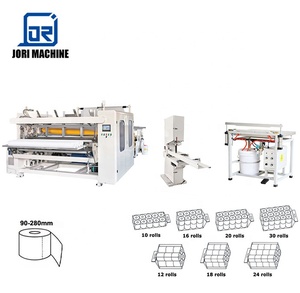
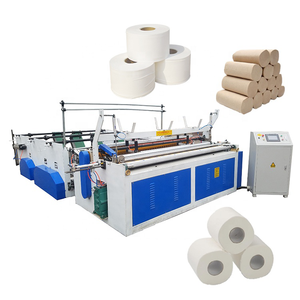
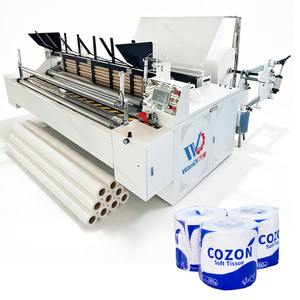
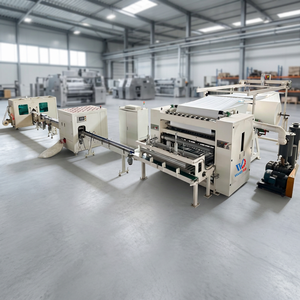
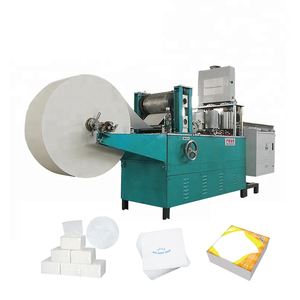
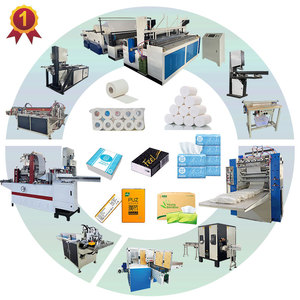
A modern high-capacity facial tissue production line operates as a seamlessly synchronized continuous system. At Andina Heavy Tissue Machinery S.A., our engineering design focuses on eliminating mechanical vibration, minimizing tissue dust accumulation, and maximizing output yield per shift. Below is the full system operational flow engineered for industrial plants in Alajuela:
1. Jumbo Roll Unwinding & Tension Control Unit
The converting process begins with dual or triple parent roll unwinding stands. Equipped with flat-belt pneumatic loading arms, the unit easily handles parent rolls up to 1500mm in diameter and width spans tailored to your desired machine lanes (e.g., 2-lane, 4-lane, 6-lane, or 8-lane configurations). Variable Frequency Drives (VFD) coupled with closed-loop tension sensors maintain constant web tension regardless of unwinding speed or parent roll diameter reduction, preventing sheet tension tears during high-acceleration runs.
2. Precision Embossing & Steel-to-Rubber Calendering
To enhance tactile softness and bulk volume, sheets pass through precision-machined steel-to-rubber or steel-to-steel embossing rollers. Converters can choose full-surface micro-embossing, edge-embossing, or 3D point-to-point pattern bonding. Our rollers utilize chrome-plated hardened steel with laser-engraved textures, maintaining crisp pattern resolution over hundreds of millions of revolutions without flattening paper fiber structures.
3. Vacuum-Assisted Interfolding System (V-Fold / Interfold)
The core technology of facial tissue folding relies on high-speed vacuum suction cylinders. The continuous paper web is slit longitudinally using rotary sheer blades, then pulled onto dual counter-rotating folding rollers. Using precise vacuum timing valves, the sheets are folded into a continuous interlocked V-fold structure (so that pulling one sheet automatically elevates the subsequent sheet out of the dispenser box or soft-pack). Our folding heads operate reliably at speeds reaching 200 meters per minute (up to 3000 sheets per lane per minute).
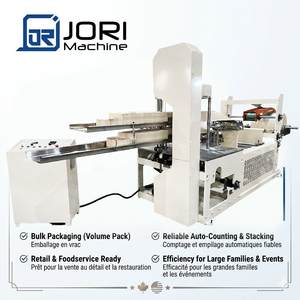
4. High-Speed Automatic Log Saw Cutting Machine
Once folded into continuous long tissue logs, orbital log saws slice the paper into exact client-specified lengths (typically 190mm to 210mm). Equipped with ultra-sharp tungsten carbide circular blades, automated blade sharpening grinding stones, and servo-guided pusher arms, our log saws ensure zero edge-burring or sheet deformation. Integrated optical sensors automatically purge end-trim waste logs before entering the packaging cell.
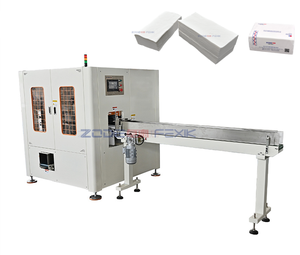
5. Servo-Driven Soft-Pack & Box Packaging Module
Cut tissue stacks are automatically metered by count (e.g., 50, 80, 100, 150, or 200 sheets per pack) and directed into high-speed wrapping channels. For soft-pack production, tissues are wrapped in PE/CPP flexible film, hermetically heat-sealed, and fitted with optional tear-tape openings. The entire sequence is governed by a central Siemens S7-1500 PLC via EtherCAT communication, achieving packing rates of up to 120 bags per minute.
| Performance Specification | Standard Converter Line | High-Speed Industrial Turnkey Line | Enterprise Multi-Lane System |
|---|---|---|---|
| Production Capacity | 1.5 – 2.5 Tons / 8 Hours | 4.0 – 6.0 Tons / 8 Hours | 8.0 – 12.0 Tons / 8 Hours |
| Max Machine Speed | 800 – 1200 sheets/min/lane | 1500 – 2000 sheets/min/lane | 2200 – 3000 sheets/min/lane |
| Parent Roll Width | 420mm – 840mm (2-4 Lanes) | 1260mm – 1680mm (6-8 Lanes) | 2100mm – 2800mm (10-12 Lanes) |
| Applicable GSM Range | 14 – 20 gsm (2-ply) | 13 – 22 gsm (2-ply to 4-ply) | 12.5 – 24 gsm (1-ply to 4-ply) |
| Power Consumption | 15 kW – 22 kW | 37 kW – 55 kW | 75 kW – 110 kW |
| Control Interface | Standard Touchscreen HMI | 15" Color HMI + Remote IoT Diagnostic | Full Smart Factory Industry 4.0 Suite |
| Labor Requirement | 3 – 4 Operators per shift | 2 Operators per shift | 1 Operator + Automatic Palletizer |
Information Gain: Cost-Per-Pack Financial Benchmark for Alajuela Wholesalers
A clear, transparent breakdown of production economics to guide procurement capital allocation
When purchasing tissue converting equipment, initial capital expenditure (CAPEX) represents only a fraction of total lifecycle cost. To achieve sustainable profitability in the competitive Alajuela market, factory managers must evaluate operational expenditure (OPEX), material waste percentages, and energy consumption per finished case. Below is an engineering economic model based on actual plant performance data collected across LATAM installations:
Raw Material Yield Optimization
Traditional converted lines exhibit scrap rates between 3.5% and 5.0% caused by misfeeds, uneven log cutting, and film sealing misalignments. Andina's servo-synchronable control reduces total line waste to less than 1.2%. On a 5-ton daily output, saving 3.8% of paper raw material yields up to 190 kg of saved pulp daily—translating into thousands of dollars in annual savings.
Labor Efficiency & Automation Payback
By integrating automated log saw feeding, automatic stack counting, and synchronized flow-wrapping, labor overhead drops from 6 workers down to 2 operators per shift. In Costa Rica, where social security contributions (CCSS) and mandatory benefits represent a substantial addition to base payroll, reducing headcount per line significantly accelerates full capital payback down to 14–18 months.
Furthermore, local importers in Central America face volatile international shipping freight tariffs. By importing raw parent rolls in dense jumbo format (ocean container payload up to 21 tons of raw pulp) and converting locally in Alajuela, distributors avoid paying high maritime container rates to ship lightweight, air-filled finished tissue boxes from overseas factories.
Why Leading Global Brands Partner with Andina Heavy Tissue Machinery S.A.
30+ years of dedicated machinery development, 3 production centers, and rigorous quality assurance
Since our establishment in 1993, Andina Heavy Tissue Machinery S.A. has grown into a premiere international designer and manufacturer of tissue converting equipment. With three state-of-the-art production bases located across Shanghai, Foshan, and Chengdu spanning over 10,000 square meters of high-precision CNC machining workshop space, we control every step of machine fabrication in-house.
Unlike trading agents or regional assemblers, our facilities utilize heavy-duty gantry CNC milling centers, heat-treatment hardening furnaces, and laser alignment measuring instruments to fabricate heavy structural steel frames. This robust mechanical foundation prevents frame flex and vibration, ensuring machine precision maintained over decades of continuous 24/7 operation.
ISO 9001 & CE Certified
Every line complies fully with European CE safety standards, featuring safety light curtains, emergency stop circuits, and protective interlocked doors.
In-House CNC Center
Critical mechanical components, folding rollers, and cutter shafts are precision machined internally to tolerances within ±0.01mm.
Global Field Support
With machine installations in over 160 countries, our technical team offers overseas installation, commission training, and IoT remote online diagnostics.
Frequently Asked Questions for Buyers in Alajuela
Expert answers addressing electrical standards, logistics, installation, and custom packaging flexibility
What electrical voltage configuration is provided for equipment delivered to Costa Rica?
Can the facial tissue production line adjust to produce multiple pack sizes?
How are shipping, customs clearance, and port logistics handled for Alajuela imports?
What post-installation technical service and spare parts support are offered?
What raw paper rolls (jumbo rolls) can be sourced for local converting?
What is the average lead time from order confirmation to plant commissioning?
Ready to Expand Your Tissue Converting Capacity in Alajuela?
Contact our application engineering team today for a tailored plant layout drawing, custom equipment proposal, and detailed ROI economic analysis.
Send an Inquiry