CE-Certified Tissue Processing & Secondary Bundling Machinery
Explore our industrial-grade tissue converting equipment, high-speed folders, and automated bundle packing machinery calibrated for demanding North American and European production standards.
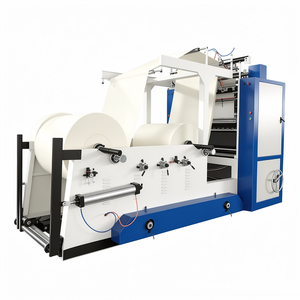
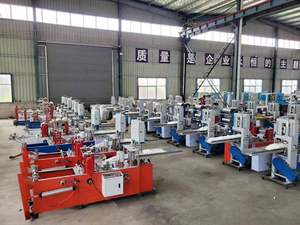
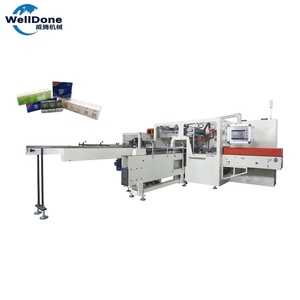
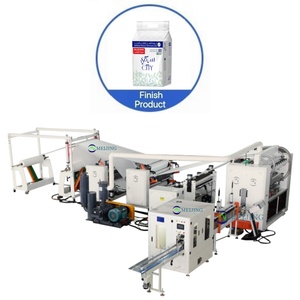
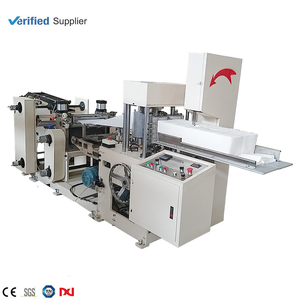
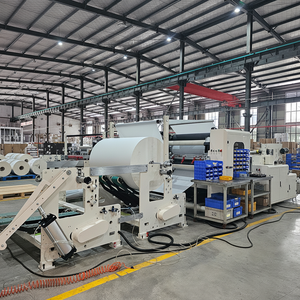
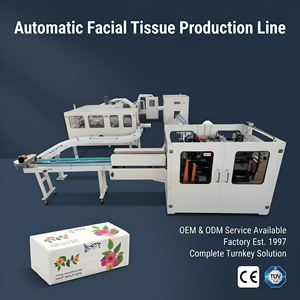
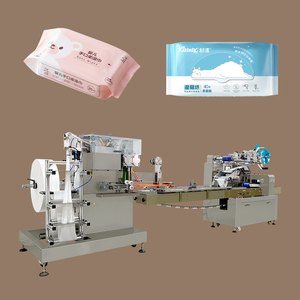
Next-Generation Tissue Bundling Automation: Architectural Principles & CE Compliance for Louisville Enterprises
In the contemporary tissue manufacturing landscape across the Mid-South region—anchored prominently by the multi-modal logistics corridor of Louisville, Kentucky—secondary packaging and tissue bundling automation represent the definitive lever for Overall Equipment Effectiveness (OEE) optimization. As tissue paper converting lines achieve speeds exceeding 200 meters per minute or multi-line outputs up to 75 packs/min, downstream secondary overwrapping must execute with absolute mechanical synchronization, pneumatic precision, and thermal sealing consistency.
For plant managers, industrial engineers, and procurement specialists operating within the greater Louisville metropolitan area and the Ohio Valley manufacturing belt, sourcing a CE Certified Tissue Bundling Machine is not merely a regulatory checkbox under European Union Machinery Directive 2006/42/EC; it serves as a rigorous technical proxy for operational safety, structural integrity, electromagnetic compatibility (EMC Directive 2014/30/EU), and low-voltage electrical protection (LVD 2014/35/EU). Incorporating CE-marked architecture ensures compliance with stringent OSHA standards, UL 508A control panel panelization requirements, and NFPA 79 electrical safety specs demanded by North American industrial facilities.
Technical Definition of Tissue Bundling Information Gain:
Modern tissue bundling machine engineering replaces legacy mechanical cam mechanisms with multi-axis servo motion systems (typically utilizing 3 to 7 independent servo drives). This allows direct real-time tension adjustment for low-grammage PE (Polyethylene) film or biodegradable bio-films ranging from 25 to 60 microns, completely eliminating film puncture, structural skew, and thermal burn-through during high-speed bundle grouping.
Kinematics & Secondary Overwrapping Workflow Mechanics
A fully integrated automatic tissue bundling production line connects directly to upstream log saws, high-speed V-fold or Z-fold facial tissue folders, napkin lines, or toilet roll tail sealers. The secondary bundling process follows a structured, multi-stage mechanical sequence designed for high repeatability and minimal maintenance downtime:
- High-Speed Infeed & Dynamic Stacking: Individual soft packs, boxed facial tissues, or toilet paper rolls are received via multi-lane flighted conveyors. Programmable servo pushers collate products into precise matrix configurations (e.g., 2x3, 2x5, 3x4 bundle orientation).
- Servo Film Unwinding & Constant Tension Control: Microprocessor-controlled unwind stands dynamically measure roll diameter and automatically regulate braking torque via dancer arms, ensuring zero film deformation regardless of machine deceleration or acceleration cycles.
- Precision Film Cutting & Wrapping Envelope Formation: A high-durability, rotary or guillotine cutter slices the poly film to millimeter accuracy, while dynamic mechanical folding flaps envelope the tissue pack with uniform overlapping margins.
- Hermetic Impulse Sealing & Thermal Shrink Tunneling: Dual side-sealing heating bars with continuous digital PID temperature control apply localized heat, forming pristine longitudinal and lateral seals without thermal damage to delicate primary tissue packaging. Optional shrink tunnels utilize forced hot-air recirculation for tight, retail-ready bundles.
Localized Application Scenarios in Louisville & the Ohio Valley Logistics Corridor
Louisville, Kentucky stands as a paramount logistics powerhouse in North America, dominated by UPS Worldport, inland riverports, and strategic interstate convergence (I-65, I-64, I-71). This geographic position makes local paper mills, tissue converters, and third-party contract packagers (3PL) uniquely dependent on robust secondary overwrapping machinery that withstands rigorous freight handling, high-density warehousing, and direct-to-consumer fulfillment workflows.
E-Commerce & Retail Logistics Hubs
Configured specifically for multi-pack e-commerce shipping out of Louisville distribution centers. High-density poly film bundling protects tissue bundles against moisture, puncture, and transport vibration during long-haul freight operations.
Commercial Away-From-Home (AFH) Tissue
Tailored for high-volume converting facilities producing institutional paper towels, jumbo roll tissue (JRT), and multi-fold hand towels distributed across regional hospital networks, hotel chains, and educational campuses.
Private-Label Contract Converting
Provides rapid toolless recipe changeover on PLC touchscreens (HMI) within 10 to 15 minutes, allowing Louisville OEM packagers to seamlessly switch between facial tissue bundles, dinner napkin packs, and wet wipes.
Regional Market Trends & Technical Evolution in Mid-South Paper Packaging
The paper converting industry in the South-Central United States is undergoing a systemic transition driven by automation, sustainability mandates, and skilled labor shortages. Louisville manufacturers are increasingly replacing manual or semi-automatic hand-bundling processes with fully autonomous, servo-driven packaging lines capable of continuous 24/7 operation.
| Industry Trend | Legacy Equipment Limitations | Modern CE Bundling Machine Advantage |
|---|---|---|
| Sustainable Packaging Films | Restricted to virgin 100% PE films; high heat causes melting and uneven seals. | Multi-zone digital PID sealing handles ultra-thin recyclable films, PCR (Post-Consumer Recycled) films, and bio-degradable PLA substrates. |
| Smart Factory Integration | Isolated standalone machines without network telemetry or real-time diagnostics. | Native Industrial IoT (IIoT) modules supporting EtherNet/IP, Modbus TCP, and OPC UA for predictive maintenance and remote fault monitoring. |
| Format Versatility | Mechanical changeovers require hours of mechanical manual tuning and replacement parts. | Fully motorized sizing adjustments controlled via HMI recipe management, reducing operator intervention by over 80%. |
| Energy Efficiency | Continuous high-wattage resistance heaters with substantial thermal waste. | Impulse instant-heat technology and high-efficiency thermal insulation cutting energy consumption by up to 30%. |
Manufacturer Authority: Engineering Excellence Since 1993
Backed by over three decades of mechanical innovation, Andina Heavy Tissue Machinery S.A. operates three advanced manufacturing and CNC processing centers spanning over 10,000 square meters across Shanghai, Foshan, and Chengdu. Employing more than 300 skilled engineers, metallurgists, and automation experts, our company holds over 50 national patents and complete ISO9001 and CE international certifications.
Every tissue bundling machine supplied to our client base across 160+ countries undergoes rigorous Factory Acceptance Testing (FAT) with real tissue raw materials before dispatch. Our in-house CNC centers machine heavy-duty structural frames, heat-treated alloy shafts, and precision gearboxes to sub-micron tolerances, ensuring zero frame flex and operational stability over decades of high-speed production.
- Heavy-Duty Machine Frames: Structural steel chassis designed with low center-of-gravity engineering to eliminate vibration at max production speeds.
- Global Brand Component Integration: Outfitted exclusively with premium international electronics including Siemens/Mitsubishi PLC control systems, Schneider electricals, Sick photoelectric sensors, and Festo pneumatic cylinders.
- Turnkey Systems Engineering: Complete integration capabilities covering unwinding, folding, log cutting, primary packaging, bundle overwrapping, case packing, and robotic palletizing.
- Unrivaled Field Support & Remote IoT Diagnostics: Secure cloud telemetry enables our technical directors to perform remote PLC firmware updates, diagnostic monitoring, and real-time operational tuning anywhere in North America.
Procurement & Technical FAQs for Louisville Operations
To assist procurement managers, facility directors, and automation engineers in making informed machinery investment decisions, our engineering team has compiled answers to the most common technical questions regarding CE-certified tissue bundling equipment.
What specific electrical and safety standards do your CE Certified machines meet for US installation?
Which tissue products can be processed through the dynamic bundling machine?
How fast is product recipe changeover on your servo-driven bundlers?
What packaging film thickness and material types are supported?
How is freight and delivery handled for Louisville-area manufacturing plants?
What ongoing maintenance and spare parts support is available post-installation?
Request a Custom Technical Proposal & Machinery Quote
Consult directly with our senior application engineers to review your plant floorplan, target production output, product dimensions, and packaging automation requirements in Louisville.
Get a Quote