Product Catalogue
Featured Soft Tissue Packaging & Converting Lines
Explore our flagship high-speed tissue machinery series designed for high OEE, precise folding accuracy, and seamless film overwrapping.
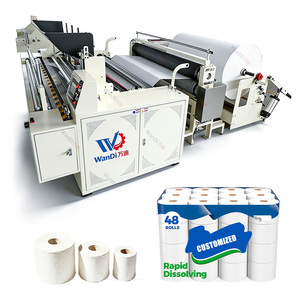
High Speed Manufacturer Tissue Paper Converting Line Machine Toilet Tissue Paper Rewinding Making Machine for Small Business
View Details & Specs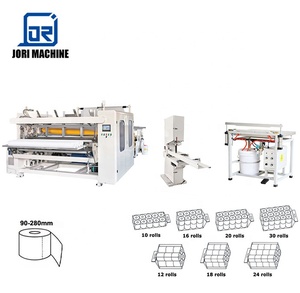
Semi Automatic Hot Sale Paper Rolling Toilet Paper Tissue Making Processing Machine Production Line
View Details & Specs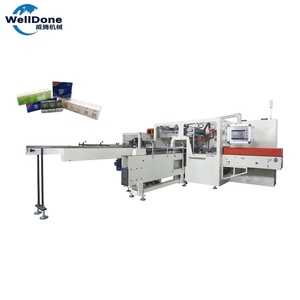
Welldone Mini Pocket Tissue Paper Making Machine Handkerchief Folding Machine for Manufacturing Plants
View Details & Specs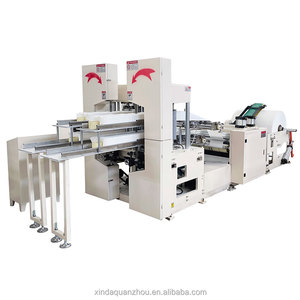
High Speed Complete Fully Automatic Paper Napkin Facial Tissue Making Machine Production Line Factory Price
View Details & Specs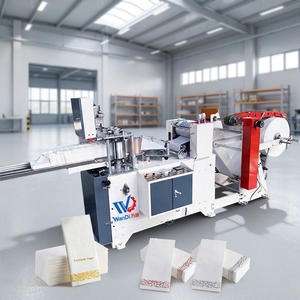
1200pcs/min Automatic Toilet Paper Machine High-speed Tissue Paper Making Machine Napkin Paper Machine
View Details & Specs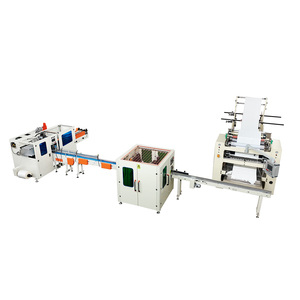
Automatic 5L V Folding Facial Tissue Paper Making Machine
View Details & Specs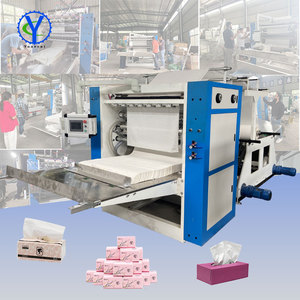
Automatic Facial Tissue Machine Tissue Paper Making Machine Fully Automatic
View Details & Specs
White Paper Analysis
Engineering White Paper: Evaluating High-Speed Soft Tissue Packaging Machinery in 2025
In the contemporary fast-moving consumer goods (FMCG) sector, soft tissue products—ranging from V-folded facial tissues, soft-pack handkerchiefs, to multi-ply napkins—demand ultra-high precision during both converting and primary film packaging stages. As global consumer demand shifts heavily toward eco-friendly soft-packs over traditional rigid box formats due to lower transport volume and reduced carbon footprints, commercial paper converters are re-engineering their packaging halls. Modern machinery must strike a delicate balance between ultra-high linear speed, precise tension control, edge alignment, thermal seal integrity, and energy consumption.
Key Insight for Buyers: Upgrading from mechanical linkage systems to multi-axis direct-drive servo architectures reduces film waste by up to 35%, lowers mechanical wear maintenance costs by 40%, and yields a measurable OEE (Overall Equipment Effectiveness) threshold exceeding 92% in continuous 24/7 operations.
Technical Performance Matrix: Manual vs. Semi-Auto vs. Fully Servo Automated Packaging
To provide procurement managers and project engineers with objective evaluation criteria, the following comparison matrix highlights operational indicators across different technological tiers available from China's premier tissue machine original equipment manufacturers (OEMs):
| Performance Parameter | Traditional Semi-Automatic | Standard Automated Line | Advanced High-Speed Servo Line (Andina Standard) |
|---|---|---|---|
| Maximum Operating Speed | 20 – 40 packs/min | 60 – 100 packs/min | up to 150 – 200 packs/min (1200 pcs/min fold) |
| Drive Architecture | Mechanical Cam & Chain Drive | Hybrid Servo & Pneumatic | Full Multi-Axis Motion Controller (Siemens/Omron) |
| Packaging Film Compatibility | Standard CPP / PE Film | PE, CPP, BOPP Films | Ultra-thin PE, CPP, Biodegradable PLA & Paper Films |
| Format Changeover Time | 45 – 90 minutes (Tooling) | 20 – 30 minutes | Under 10 minutes (HMI Recipe Quick-Change) |
| Bagging Size Accuracy | ± 2.0 mm | ± 1.0 mm | ± 0.3 mm (Photoelectric Sensor Guided) |
| Yield Efficiency (OEE) | ~ 65 - 72% | ~ 80 - 85% | > 92.5% Continuous Operation |
Factory Expertise
Why Global Converters Partner with Andina Heavy Tissue Machinery S.A.
Established in 1993, Andina Heavy Tissue Machinery S.A. operates as a vertically integrated manufacturer dedicated exclusively to tissue converting and packaging automation.
3 Manufacturing Hubs (Shanghai, Foshan, Chengdu)
Over 10,000 square meters of state-of-the-art workshop capacity equipped with high-precision CNC machining centers, flame cutting units, and dynamic balancing rigs ensuring strict structural tolerances for heavy-duty steel plate machinery frames.
Stringent ISO & CE Quality Infrastructure
All machinery components undergo rigorous non-destructive structural tests and electric safety audits compliant with European Union CE Directives and ISO 9001 quality management benchmarks before leaving factory premises.
Factory Acceptance Testing (FAT) with Live Tissue
Unlike general assembly workshops, every soft tissue packing line built by Andina is calibrated using actual GSM tissue paper rolls supplied by the client during full-speed FAT runs to guarantee zero commissioning friction overseas.
Proprietary In-House Software & Motion Profiles
Our engineering team has accumulated over 50 national patents in electronic cam profiling, vacuum folding geometry, and high-precision temperature control loops tailored specifically for soft tissue characteristics.
Smart IoT Telemetry & Remote Commissioning
Equipped with secure cloud diagnostics interfaces, our application engineers monitor real-time vibration signatures, thermal profiles, and system alarms globally, enabling fast remote troubleshooting and software updates.
Complete Turnkey Line Synchronization
From parent roll slitting rewinding and interfolding to log saw cutting, soft bag sealing, bundle wrapping, and robotic case packing, Andina supplies seamless end-to-end automation with singular operational liability.
Future Outlook
Future Procurement Trends: How Soft Tissue Packaging Machinery is Evolving
As global sustainability policies enforce stricter limits on single-use plastics and raw material costs fluctuate, tissue paper manufacturers are evaluating capital equipment through a total cost of ownership (TCO) lens. To maintain market leadership over a 10-year equipment lifecycle, procurement directors are prioritising four distinct architectural shifts in packaging machinery:
1. Transition Toward Sustainable & Micro-Gauge Films
Conventional packaging machines rely heavily on standard thickness PE/CPP films (30-40 microns) to prevent film tearing during rapid acceleration. Modern soft tissue wrapping machines feature ultra-sensitive tension compensation dancer arms controlled by digital servo drives. This technological jump allows plant operators to utilize down-gauged films (18-22 microns) as well as certified 100% biodegradable PLA films and heat-sealable paper wrap without sacrificing production speed or incurring edge tears.
2. Energy Recovery & High-Efficiency Direct Drives
Energy efficiency has moved from an peripheral specification to a core commercial metric. Traditional line gearboxes suffer power transmission losses of up to 15-20%. The current generation of soft tissue packaging equipment incorporates direct-drive torque motors coupled directly to sealing jaws and feeding belts. Furthermore, shared DC bus power supplies recover braking energy from high-inertia deceleration cycles, feeding power back into accelerating drives to drop power consumption by over 22% per ton of packaged paper.
3. Multi-SKU Flexibility & Rapid Digital Format Changes
E-commerce expansion has forced paper mills to manage smaller batch sizes with diverse packaging formats—ranging from single pocket tissues to 10-pack soft bags and 60-pack family bundles. Procurement focus has shifted to modular packaging machines featuring servo-adjusted guide rails, tool-less quick-release forming boxes, and automated HMI parameter recall. Operators can switch production formats from 100-sheet facial tissue soft packs to 200-sheet packs in under 10 minutes via touchscreen selection.
4. Embedded Quality Inspection & Machine Vision Integration
To safeguard against brand degradation and expensive retailer returns, modern tissue packaging lines incorporate optical AI inspection camera systems directly downstream from the log saw and packaging jaws. These optical arrays detect paper dust buildup, folded corner defects, missing perforated tear strips, and improper film seal alignments in real time, automatically rejecting non-conforming packs without slowing down the primary production line.
Industry Roadmap
Technological Evolution: The Next Decade in Soft Tissue Manufacturing
The soft tissue machinery sector is undergoing a rapid technological convergence where mechanical engineering, industrial software, and material science meet. Understanding these fundamental industry trends allows enterprise buyers to future-proof capital expenditure investments against premature obsolescence.
Phase 1: Vacuum-Assisted High Density Folding
Historical mechanical folding jaws relied heavily on physical contact blades that caused fiber shedding and web breakage at speeds above 800 sheets/min. Modern tissue converting lines utilize high-vacuum suction drums combined with air-jet assists, maintaining paper web integrity at speeds exceeding 1,200 to 1,500 sheets/min even on ultra-soft 12.5 GSM tissue stocks.
Phase 2: Intelligent Thermal Pulse Sealing
Uniform heat distribution across high-speed transverse sealing bars has long been a technical bottleneck. Next-generation packaging machines implement closed-loop PID temperature sensing coupled with impulse heating alloys, ensuring clean hermetic seals at 150 cycles/min without burning delicate film edges or leaving loose film tails.
Phase 3: Autonomous Secondary & Tertiary Automation
Individual soft packs are no longer handled manually. The packaging hall of 2025 integrates automatic grouping pushers, bundle overwrappers, case packers, and robotic arm palletizers directly linked via bus communication. A single supervisory control technician can manage an entire line from raw jumbo roll loading to stretch-wrapped pallet output.
Buyer Guidance
Frequently Asked Questions (Engineering & Procurement)
Detailed technical answers to common queries raised by factory engineering directors and equipment buyers during project technical clarify sessions.
Which soft tissue product formats can be converted and packed using your machinery line?
Our comprehensive machinery lineup processes the full spectrum of soft tissue products, including interfolded facial tissues (V-fold, Z-fold, and W-fold profiles), embossed multi-ply table napkins, high-speed toilet paper roll rewinding and single/bundle packaging, pocket handkerchief paper tissues, N-fold / Z-fold hand towels, as well as non-woven cotton dry wipe packs and hygiene sanitary pad products. Equipment configurations can be tailored to handle tissue basis weights ranging from 11 GSM to 45 GSM per ply.
What is the structural difference between semi-automatic and fully automatic tissue packaging lines?
Semi-automatic lines require manual operator loading of folded tissue logs into premade bag magazines or manual transfer from log saws to wrapper infeeds, making them ideal for small footprint operations or lower labor-cost regions producing under 40-50 packs per minute. Fully automatic lines integrate synchronized automatic transfer conveyors, electronic log saw buffers, continuous film pouch forming, high-speed rotary sealing jaws, and online bundle packing. This eliminates manual touchpoints, ensures superior hygiene, and operates continuously at speeds up to 150-200 packs per minute.
How does Andina ensure machine stability during continuous 24/7 high-speed production?
Machine structural stability begins with our heavy-duty wallboard frames machined from solid steel plate on 5-axis CNC centers to eliminate mechanical resonance. Rotating elements—including folding rollers, knife shafts, and sealing jaws—undergo dynamic computer balancing. Furthermore, we utilize premium global electrical components (such as Siemens PLC, Yaskawa/Schneider servo drives, Sick photoelectric sensors, and NSK bearings) alongside centralized automatic lubrication systems to ensure smooth thermal execution during continuous heavy-duty duty cycles.
What film materials and thickness ranges are compatible with your soft tissue overwrappers?
Our soft pack packaging machinery is engineered to process standard CPP (Cast Polypropylene), PE (Polyethylene), and BOPP films with thickness profiles ranging from 18 microns up to 45 microns. Thanks to sensitive servo tension controls and digital heating profiles, our machines also support sustainable packaging media, including micro-gauge recyclable films, bio-based PLA films, and specialized heat-sealable paper wrapping materials.
What after-sales service, commissioning support, and spare parts availability do you offer overseas buyers?
Andina provides comprehensive lifecycle support for overseas buyers in over 160 countries. Services include on-site factory layout planning, electrical and mechanical installation supervision, line commissioning, and comprehensive operator training conducted by multi-lingual field service engineers. All machinery comes with standardized spare parts lists backed by express global DHL/FedEx spare parts dispatch centers and integrated IoT remote telemetry for immediate online diagnostic assistance.
What technical parameters are required from a buyer to receive an accurate custom machinery proposal?
To allow our application engineering team to design an optimal technical line configuration, buyers should provide: (1) Finished tissue product dimensions (length, width, height, sheet count, ply, and folding style); (2) Parent roll specifications (diameter, width, core diameter, GSM weight, and paper grade); (3) Target production capacity per shift or minute; (4) Desired primary packaging style (soft pack pouch, box, or sleeve) and secondary bundle format; and (5) Available factory floor dimensions and electrical power standards (Voltage/Hz).
Request a Tailored Engineering Proposal & Plant Layout
Connect directly with Senior Application Engineers at Andina Heavy Tissue Machinery S.A. to analyze your tissue production requirements, schedule factory acceptance testing, or receive a formal commercial quote.