High-Performance Tissue Converting Equipment Directory
Explore our top-recommended industrial-grade tissue converting machinery and integrated automation lines. Engineered for high-speed operation, high precision embossing, and minimal maintenance downtime.
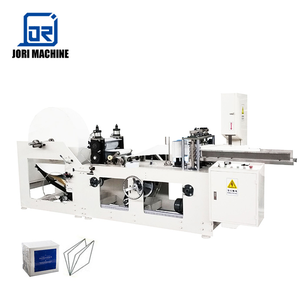
Tissue Paper Converting Machine Napkin Folding Embossing Machine
Designed for precise folding and high-definition geometric embossing. Features multi-color printing unit options, tension control, and electronic counting.
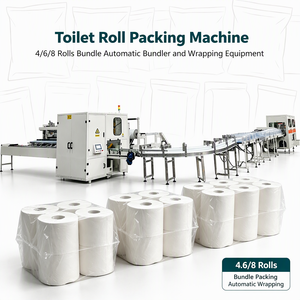
Turnkey Tissue Converting Line Complete Toilet Roll Production Plant 200m/min
Full automated plant line integrating jumbo roll rewinding, perforation, log saw cutting, and bundle packing operating at speeds up to 200m/min.
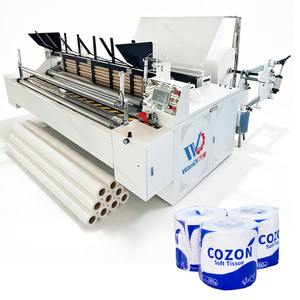
Automatic Toilet Paper Jumbo Roll Rewinding Machine
Heavy-duty rewind unit utilizing PLC servo drives for automated paper core feeding, web trimming, edge spraying, and consistent log density control.
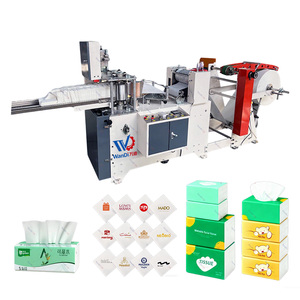
Full Automatic 2 Color Napkin Tissue Paper Folding Machine
Compact converting machinery suited for small-to-medium enterprises. Includes dual flexographic ink printing stations and synchronized folding heads.
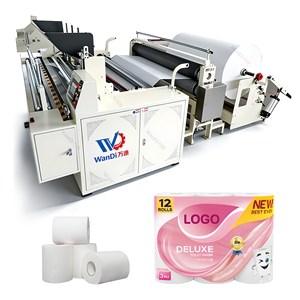
1575/1800/2200 mm Automatic Tissue Paper Rewinding Machine
Versatile multi-width rewinder accommodating standard jumbo roll dimensions. Optimized for low noise, low vibration, and high sheet integrity.
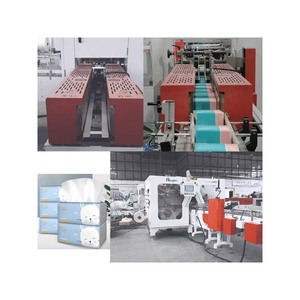
Facial Tissue Paper Manufacturing and Packing Line
End-to-end continuous production line for interfolded facial tissue, combining high-speed web folding, automated log cutting, and film wrapping.
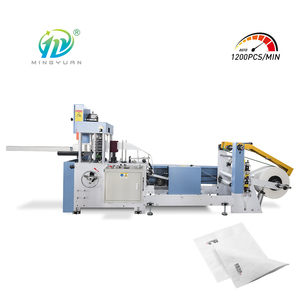
Automatic Tissue Napkin and Toilet Paper Machine
Cost-effective multi-functional machinery suite offering robust mechanical stability, easy operation interfaces, and fast pattern changeover times.
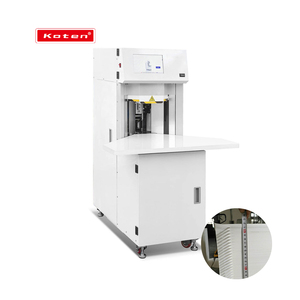
Full Automatic Pocket Tissue Paper Handkerchief Production Line
Precision handkerchief paper folding unit equipped with inline automatic counting, transfer mechanics, and multi-pack outer bundle wrapping.
Executive Procurement Guide: Selecting Top Tissue Converting Machinery Manufacturers
The global tissue paper converting market has undergone a fundamental transformation. Driven by surging demand for sustainable tissue products, heightened hygiene awareness, and expanding e-commerce logistics, paper tissue converting factories are modernizing their production floors. Evaluating tissue machinery manufacturers requires looking beyond basic price quotes; procurement officers must analyze total cost of ownership (TCO), mechanical durability, servo synchronicity, and line scalability.
Technical Benchmark Insight: Modern high-speed tissue converting lines operating above 200 m/min require closed-loop servo control systems (such as Siemens S7-1500 Motion Control or Omron NJ series) to maintain web tension within ±1.5% accuracy. Inadequate tension control leads to web breakage, uneven perforation pitch, and micro-embossing collapse, reducing overall equipment effectiveness (OEE) by up to 22%.
Mechanical Drive vs. Full Servo Integration
Traditional mechanical gear-driven machinery often suffers from cumulative mechanical wear, requiring frequent lubrication and physical cam adjustments. Modern full-servo converting lines utilize direct-drive motors on each axis, eliminating line-shaft gearboxes, reducing operating sound levels below 75 dBA, and enabling sub-millimeter adjustment of sheet lengths on-the-fly via touch HMI screens.
Embossing Technology & Fiber Bulk Enhancement
Embossing is no longer purely aesthetic; it is a structural engineering method to maximize bulk, absorption capacity, and tactile softness while minimizing raw material pulp consumption. High-tier suppliers integrate steel-to-rubber, steel-to-steel, or point-to-point (DERL/Nested) embossing units equipped with hydraulic nip pressure systems to maintain uniform depth across jumbo widths.
Log Saw & Cutting Precision Engineering
The bottleneck of high-speed roll processing often resides in the log saw unit. Leading manufacturers design orbital log saws with automated circular blade sharpening mechanisms, dual-channel servo-guided log feeding, and integrated optical inspection to eliminate core distortion, tail-end tears, and slanted cutting faces.
Equipment Classification & Performance Matrix
Compare core operating parameters across key categories of tissue converting and packaging machinery to match specific plant capacity targets and operational budgets.
| Machine Category | Typical Mechanical Speed | Parent Roll Width Range | Core Automation Features | Primary Target Products |
|---|---|---|---|---|
| Toilet Roll Rewinding Lines | 180 – 300 m/min | 1575 mm – 2800 mm | Auto Core Loading, Edge Spraying, Pneumatic Jumbo Lift, Log Accumulator | Toilet Paper Rolls, Kitchen Towels |
| Facial Tissue Interfolding Lines | 800 – 1200 sheets/min/lane | 1200 mm – 2100 mm | V/N Fold Vacuum Absorption, Auto Counting Stacker, Continuous Log Saw Feed | Boxed Facial Tissue, Soft-Pack Tissue |
| High-Speed Napkin Folding Lines | 600 – 1000 pcs/min | 230 mm – 430 mm (unfolded) | Flexo 2-Color Printing, Point-to-Point Embossing, Vacuum Folding, Auto Banding | 1/4 Fold, 1/8 Fold Dinner & Cocktail Napkins |
| Handkerchief Pocket Tissue Lines | 500 – 800 packs/min | 200 mm – 210 mm | Z-Fold Interfolder, Inline Individual Wrapper, Bundle Overwrapper | Wallet-Pack & Pocket Handkerchief Tissues |
| Cotton / Non-Woven Towel Packers | 40 – 75 bags/min | Custom Widths | Multi-Servo Bag Form-Fill-Seal, Gusseting Unit, Precise Thermal Sealing | Disposable Cotton Facial Towels, Wet Wipes |
Strategic Procurement Trends Shaping the Tissue Industry (2025–2030)
As commercial converters adjust to shifts in global pulp costs, supply chain dynamics, and regulatory directives against single-use plastics, equipment purchasing criteria are rapidly evolving. Procurement leaders should align capital expenditure with the following key technology trends:
01. Transition to Sustainable & Plastic-Free Wrapping
Environmental legislation across Europe, North America, and Asia-Pacific is pushing tissue converters to transition from standard Polyethylene (PE) film packaging to fully recyclable craft paper wrapping or bio-based PLA films. Modern packing machinery must feature advanced temperature-controlled sealing jaws, static discharge systems, and variable tension unwinds capable of handling delicate paper wrappers without tearing.
02. Industry 4.0 Integration & Cloud Telemetry
Next-generation converting lines come embedded with IoT sensors and edge gateways that collect real-time telemetry on bearing temperatures, motor vibration profiles, air pressure stability, and raw sheet consumption. Plant managers can leverage cloud dashboards to monitor OEE remotely, schedule predictive maintenance before mechanical failure occurs, and receive instant diagnostic alerts on mobile devices.
03. Energy Efficiency & Energy-Recovery Vacuum Systems
Vacuum pumps account for up to 30% of total electrical energy consumed in facial tissue interfolding and napkin manufacturing plants. Leading machinery factories are replacing traditional liquid-ring vacuum pumps with high-efficiency frequency-controlled turbo blowers and energy-recovery heat exchanger loops, cutting factory energy consumption by up to 25% per ton of processed tissue.
04. Modular Line Architecture & Rapid SKU Changeovers
With consumer goods companies expanding into boutique, eco-friendly, and private-label brands, production lines must adapt to varying pack counts, sheet counts, and roll diameters. Modular machinery architectures allow fast tool-less changeover between single-roll, 4-roll, 12-roll, and multi-layer bundle formats in under 20 minutes, vastly reducing scheduled plant downtime.
Enterprise Profile: Andina Heavy Tissue Machinery S.A.
Established in 1993, Andina Heavy Tissue Machinery S.A. has established itself as an international pioneer in the design, engineering, and manufacturing of turnkey tissue paper converting and packaging equipment. With over three decades of mechanical innovation, our organization delivers heavy-duty converting systems to tissue manufacturers across more than 160 countries.
Multi-Base Manufacturing Power
Spanning three state-of-the-art production hubs located in Shanghai, Foshan, and Chengdu, encompassing over 10,000 square meters of assembly workshops and heavy CNC machining centers. Over 300 skilled engineers, technicians, and QA specialists ensure every component meets rigorous international tolerances.
Rigorous QA & International Certification
All converting lines and stand-alone modules are engineered in accordance with ISO 9001:2015 quality management standards and possess full European CE certification. Our dedicated R&D department holds more than 50 national patents covering mechanical folding kinematics, ultrasonic sealing, and automated tension balancing.
Global Lifecycle Support & Remote Assistance
From pre-sale floorplan design and ROI modeling to on-site commissioning, operator training, and lifetime spare parts availability. Our international field-service engineers and remote cloud diagnostics support guarantee uninterrupted continuity for your tissue processing plant.
Request Our Complete 2025 Engineering Catalog
Get full technical schematics, speed graphs, utility consumption specs, and custom line quotes directly from our engineering team.
Frequently Asked Procurement Questions (FAQ)
Detailed answers to critical engineering, installation, and procurement questions commonly raised by paper converting plant owners and operational managers.
Which tissue substrate grades and grammage (GSM) can your converting machines process?
Our tissue converting machinery is engineered to handle a broad range of raw paper stock, including 100% virgin wood pulp, de-inked recycled fiber, bamboo pulp, and non-woven cotton blends. Grammage capabilities span from lightweight 11 g/m² 2-ply facial tissue paper up to heavy 42 g/m² single-ply towel and napkin stock. Automatic pneumatic unwinds with web-tension balancing ensure fragile sheets feed continuously without web breaks.
Do you supply full turnkey production plants or individual stand-alone units?
We supply both complete turnkey production solutions and individual stand-alone processing units. For buyers upgrading existing production lines, our individual rewinders, log saws, interfolders, or packaging machines can be integrated via PLC handshaking signals with third-party equipment. For new factory investments, we engineer fully synchronized turnkey lines from parent roll loading to robotic palletizing.
What are the typical lead times and Factory Acceptance Testing (FAT) protocols?
Standard manufacturing lead time ranges from 45 days for stand-alone units up to 90–120 days for complex, fully automated turnkey production plants. Prior to dispatch, every machine undergoes a mandatory 72-hour continuous trial run during Factory Acceptance Testing (FAT). We run the machinery using the buyer’s specific parent roll raw paper samples to verify mechanical speed, embossing definition, cut accuracy, and packaging seal integrity.
How are embossing roll patterns customized for specific market requirements?
Embossing patterns are custom-designed using 3D CAD modeling and engraved onto high-alloy steel rollers utilizing state-of-the-art laser engraving technology. Converters can select from standard geometric, floral, or micro-embossing textures, or request custom brand logos and proprietary borders. Rubber rollers are formulated with specific Shore A hardness levels matched to the paper ply density and desired bulk output.
What electrical specifications and power requirements are required on site?
Our standard electrical configuration is 380V, 3-Phase, 50Hz. However, electrical cabinets can be custom-wired to match regional industrial power grids worldwide, including 220V 3-Phase 60Hz (Americas) or 415V 50Hz (Commonwealth regions). All control panels use globally available electrical components from Schneider, Siemens, Omron, and Mitsubishi to ensure seamless local spare parts sourcing.
What after-sales service, installation, and operator training do overseas buyers receive?
Every equipment purchase includes full overseas technical installation support. We dispatch experienced mechanical and electrical field engineers directly to your plant facility to manage machinery positioning, wiring, mechanical alignment, and commissioning. Our engineers conduct comprehensive hands-on training for your operating crew covering HMI parameter setup, daily maintenance, knife sharpening, and safe line clearance procedures.
How do remote diagnostic modules assist in troubleshooting line stoppages?
All modern servo-driven machines are equipped with secure VPN remote communication modules. In the event of an operational anomaly or software calibration requirement, our master engineers in China can securely log into your machine's PLC interface remotely. This enables immediate diagnostic fault tracing, parameter optimization, and firmware updates, resolving over 90% of operational issues without waiting for an engineer's physical travel.
What key information is required to receive an accurate engineering quotation?
To prepare an accurate engineering quote and floor layout plan, please provide: 1) Target finished tissue product type (toilet roll, facial tissue, napkin, or hand towel); 2) Parent jumbo roll dimensions (width, diameter, ply count, GSM); 3) Desired production capacity (tons per day or finished units per minute); 4) Desired packaging style (soft-pack film, corrugated box, single roll wrap, or multi-bundle); 5) Available workshop dimensions and ceiling clearance height.