High-Performance Tissue Converting & Packing Equipment
Engineered for seamless integration with high-speed facial tissue, napkin, pocket tissue, and hygiene product production lines.
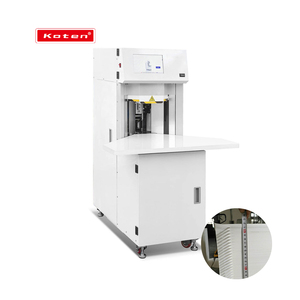
Full Automatic Pocket Tissue Paper Handkerchief Production Line Machine With Packaging Automatic Counting Transfer Thick Paper 4
Explore Product Specs →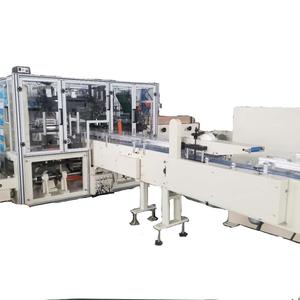
Hot Sale High Speed Automatic Tissue Paper Packing Machine in Indonesia Africa Pakistan Philippines
Explore Product Specs →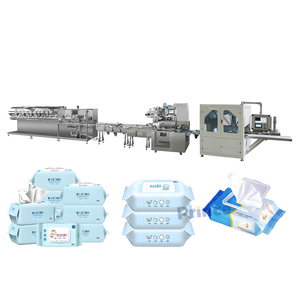
Full Automatic Wet Tissue Wipes Making Machine for Single & Multi-piece Wet Wipe Production
Explore Product Specs →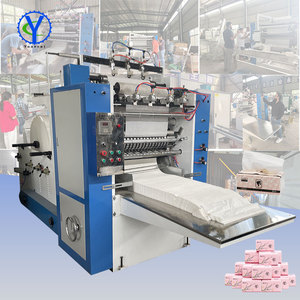
Customized Logo Tissue Paper Making Machine Facial Tissue Paper Production Line Machines
Explore Product Specs →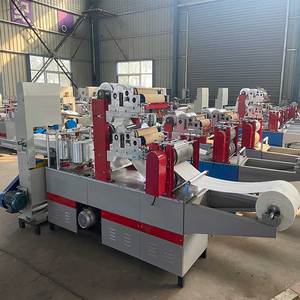
Cost Price Tissue Napkin Paper Making Machine High Speed Tissue Paper Napkin Making Machine Napkin Machine Manufacturer
Explore Product Specs →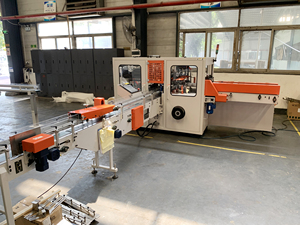
Fully Automatic Single Small Facial Tissue Soft Paper Napkin Packing Wrapping Machine
Explore Product Specs →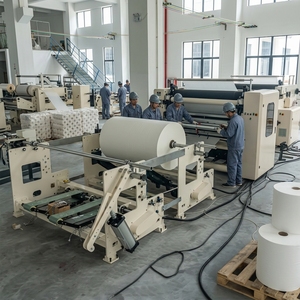
Small Business Automatic N-Fold Hand Towel Machine | PLC Controlled High Efficiency Tissue Paper Equipment Machine
Explore Product Specs →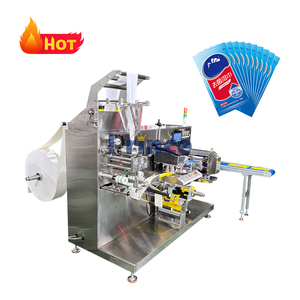
Automatic Single Piece Wet Tissue Wipes Packaging Machine Wet Facial Paper Napkin Pet Baby Wet Wipe Making Packing Machines
Explore Product Specs →Engineering Principles of Modern Facial Tissue Log Saw Cutting Machines
In high-capacity household paper converting, the log saw cutting machine serves as the essential bridge between multi-lane tissue folders and downstream primary packing lines. Modern facial tissue conversion demands extreme cutting precision, zero edge deformation, minimal dust generation, and seamless speed synchronization up to 220 cuts per minute per lane. Selecting the appropriate OEM/ODM cutting machinery manufacturer determines the overall operational efficiency, yield rate, and finished product aesthetic for tissue converters worldwide.
1. Orbital Cutting Motion vs. Linear Band Saw Mechanics
Historically, band saws were widely utilized for paper roll slitting. However, for premium folded facial tissues and soft-pack tissues, orbital circular log saws have established undisputed dominance. Orbital rotation allows continuous log feeding without stopping or indexing pause, drastically lowering mechanical stress on drive belts and servo motors.
The cutting head swings in a calculated orbital arc that matches the forward linear conveyor speed of the tissue log during the precise millisecond of blade penetration. This synchronized velocity vector guarantees a perpendicular 90-degree cut face, preventing diagonal skewing or uneven stack widths across multi-pack tissue bundles.
2. Thermal Dissipation & Automatic Blade Sharpening Systems
Continuous cutting through high-density tissue logs generates localized friction heat up to 180°C at the blade bevel. Heat accumulation accelerates tungsten carbide edge dulling and risks singing delicate virgin or bamboo fiber tissue edges. Leading OEM/ODM machinery integrates pneumatically metered micro-lubrication combined with automated grinding stone assemblies.
Integrated PLC controls execute auto-sharpening routines at programmable intervals (e.g., every 15–30 cutting strokes). Dual CBN (Cubic Boron Nitride) grinding wheels automatically advance by micron increments to maintain edge razor-sharpness while preserving circular blade concentricity over millions of cycles.
Log Saw Machine Configurations & Performance Metrics
Evaluating single-channel, dual-channel, and quad-channel facial tissue cutting machinery for plant floor planning.
| Machinery Parameter | Single-Lane Entry Log Saw | Dual-Lane High-Speed Log Saw | Quad-Lane Industrial Log Saw |
|---|---|---|---|
| Target Production Capacity | 50 – 90 cuts/min | 120 – 180 cuts/min | 200 – 240 cuts/min |
| Blade Diameter Standard | Ø 610 mm | Ø 810 mm / Ø 1000 mm | Ø 1000 mm Heavy Duty |
| Log Diameter Range | 70 mm – 130 mm | 90 mm – 160 mm | 90 mm – 200 mm |
| Servo System Drive | 3-Axis Servo Motion | 5-Axis Synchronized Servo | 8-Axis Full Motion Controller |
| Trim Waste Extraction | Single Suction Hose | Dual High-Pressure Blow-Off | Automated Trim Sorting Conveyor |
| Primary Application | Small-Medium Wholesalers / OEM | Commercial Facial Tissue Lines | 24/7 Mega-Scale Tissue Plants |
Why Global Wholesalers & Converters Partner with Us
Multi-Axis Servo Synchronization
Utilizing Schneider and Siemens motion controllers, each log feeding channel, clamp drive, and orbital knife head operates on independent servo loops to guarantee cut length precision down to ±0.3mm across variable line speeds.
Adaptive Clamp Pressure Control
Pneumatic top and side clamps dynamically adjust gripping force according to tissue log density, paper ply count, and embossed pattern bulk, preventing edge pinching and cosmetic deformation.
Automated Waste Trim Removal
Integrated pneumatic ejectors automatically separate head and tail log trims, routing clean waste into dust-sealed collection hoppers without slowing down central tissue cutter feeding cycles.
Future Sourcing & Procurement Trends for Tissue Machinery Buyers
The global household paper equipment sector is experiencing rapid technological evolution driven by changing consumer habits, e-commerce soft-pack demands, and eco-friendly fiber adoption. Procurement directors and factory managers evaluating equipment acquisitions through 2030 must prioritize the following key vectors:
-
01.
Shift Towards Modular OEM/ODM Machine Customization:
Standard off-the-shelf log saws often fail to accommodate local tissue roll widths and non-standard soft-pack dimensions. Procurement is rapidly leaning toward OEM manufacturers who offer flexible cutter head sizing, custom conveyor pitch, and tailored electrical standards (UL, CE, CSA).
-
02.
Industry 4.0 IoT Integration & Predictive Maintenance:
Modern tissue factories require real-time telemetry on blade vibration, grinding wheel life cycle, motor torque variance, and cut counts. Smart cutters equipped with edge computing sensors enable remote troubleshooting, reducing unscheduled plant downtime by up to 35%.
-
03.
Energy Efficiency & Eco-Fiber Cutting Capability:
With the market shift toward unbleached bamboo pulp, recycled fibers, and ultra-thick cotton tissues, cutting machinery must handle abrasive fibers without premature blade dulling. High-torque direct-drive servo motors reduce energy consumption by up to 22% compared to traditional gearbox drives.
Andina Heavy Tissue Machinery S.A. Manufacturing Infrastructure
Delivering full-line tissue converting, log saw cutting, and automatic packaging solutions to global B2B buyers.
3 Production Facilities & In-House CNC Machining
Spanning over 10,000 m² across Shanghai, Foshan, and Chengdu, our manufacturing centers house high-precision CNC machining centers, dynamic balancing rigs, and laser alignment tools. By machining core cutter shafts, orbital arms, and blade arbors in-house, we enforce strict quality control and guarantee long-term spare parts availability.
Every facial tissue cutting machine undergoes rigorous 72-hour continuous test runs with actual paper logs prior to factory acceptance testing (FAT) and sea-freight packing.
Global Service Network & Full OEM/ODM Services
Backed by a dedicated team of 300+ engineers, technicians, and international sales specialists, we provide turnkey line design, custom machinery modification, overseas installation, and operator training.
Whether you require a stand-alone high-speed log saw cutter or a fully integrated facial tissue production line with automatic cartooning and bundle wrapping, our technical engineering office produces tailored CAD/3D plant layouts within 48 hours of your inquiry.
Frequently Asked Questions (FAQ) for Sourcing Managers
Answers to common technical, financial, and logistical questions regarding tissue cutting machines.
What is the average lifespan of a tungsten circular cutting blade in log saws?
Can your facial tissue cutting machines handle different log diameters on one line?
What lead time is required for OEM custom log saw manufacturing?
How does the machine prevent tissue dust buildup around electrical components?
Do you offer international overseas installation and commissioning support?
What key parameters should buyers provide to receive an accurate custom quote?
Request a Customized OEM/ODM Machinery Technical Proposal
Connect directly with our senior tissue machinery application engineers to discuss machine specifications, plant layouts, and competitive factory-direct quotation packages.
Send an Inquiry