Featured Converting & Secondary Packaging Equipment
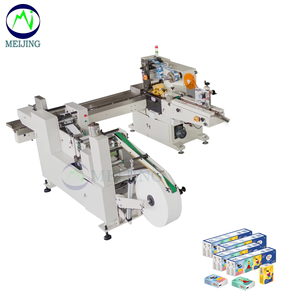
Full Automatic Mini Pocket Handkerchief Tissue Folding Machine
High-speed, stable operation folding paper equipment engineered for precise mini handkerchief tissue production lines.
View Product Details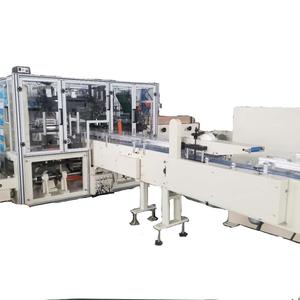
High Speed Automatic Tissue Paper Packing Machine
Industry-proven secondary tissue wrapping system customized for high-growth global consumer markets.
View Product Details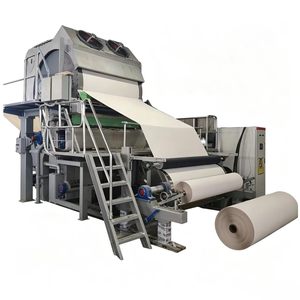
High Speed PLC Tissue Paper Making Machine (60T/Day)
Integrated 60 Tons/Day capacity paper mill production line for toilet roll and facial tissue base paper conversion.
View Product Details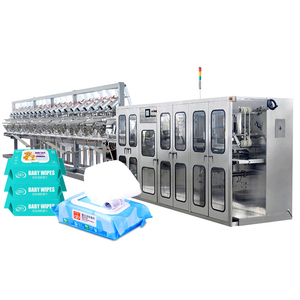
Full Automatic Wet Wipe Production & Packaging Line
High-efficiency 30–120 pcs/pack wet tissue manufacturing system with online liquid dosing and seal flow wrapping.
View Product Details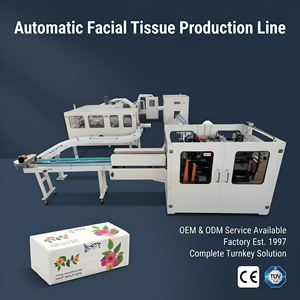
Facial Tissue Converting & Bundle Packing Line
Turnkey interfolding, log saw cutting, and bundle poly-wrapping system engineered for zero-bottleneck high-volume output.
View Product Details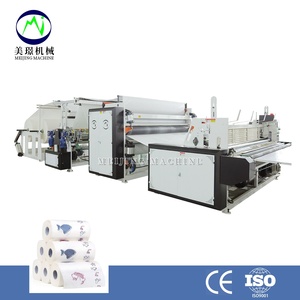
Siemens Control Glue Lamination Tissue Processing Line
Advanced toilet paper and kitchen towel converting machine featuring point-to-point glue lamination and PLC control.
View Product Details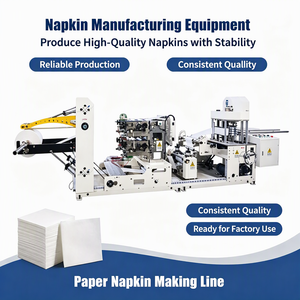
1/4 Folding Table Napkin & Interfold Facial Tissue Machine
High-speed mechanical embossing, counting, and folding line specialized for commercial HoReCa napkin production.
View Product Details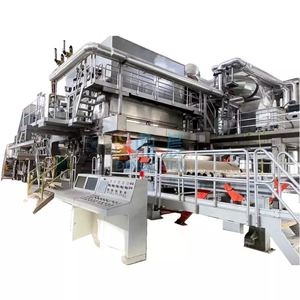
2850mm Crescent Former High-Speed Tissue Paper Machine
Industrial 25 TPD full automatic tissue paper manufacturing machinery designed for optimal energy efficiency and sheet softness.
View Product DetailsEngineering Architecture: Custom OEM Tissue Multipack Packaging Systems
In modern tissue paper manufacturing, primary converting (folding, slitting, rewinding) represents only half of the Overall Equipment Effectiveness (OEE) equation. The operational efficiency of the factory ultimately hinges on secondary and tertiary automation: custom OEM tissue multipack packaging machines. As retail distribution channels demand complex bundling configurations—ranging from 4-pack and 12-pack soft-wrapped facial tissues to 24-roll toilet paper bundles—converters require flexible, high-speed secondary packaging systems capable of handling low-basis-weight tissue without structural deformation or optical film defects.
Kinetic Collating & Dynamic Infeed
Multi-axis servo lanes receive single packs from primary wrappers, dynamically grouping and collating packs into matrix geometries (e.g., 2x3, 2x5, 3x4) at linear speeds up to 120 bundles per minute without jams.
Precision Film Tension Control
Closed-loop dancer arm rollers and vacuum-assisted feed belts maintain uniform tension across ultrathin PE, CPP, and eco-friendly recyclable barrier films down to 15 microns, preventing heat distortion.
Thermal Dynamic Sealing Jaws
Individually controlled PID heating zones integrated with continuous rotary sealing bars guarantee airtight side seals and neat end-folds, eliminating pinhole burn-throughs and weak seams.
Custom OEM integration allows machinery to adjust to specific factory layouts—whether inline, L-shaped, or parallel configurations. By removing manual pack stacking and hand-wrapping, tissue converters achieve payback on capital expenditure within 12 to 18 months through reduced labor overhead, reduced film wastage, and zero downstream bottlenecking.
Technical Insight: Balancing Linear Velocity vs. Thermal Dwell Time
A common challenge in high-speed bundle wrapping is maintaining adequate thermal dwell time for shrink film or sealing poly wraps without reducing line throughput. Andina Heavy Tissue Machinery solves this by incorporating servomotor-driven continuous-motion sealing jaws that move in synchronization with the product flow. This approach increases dwell contact time by 40% without reducing linear belt velocity.
Future Procurement Trends in Tissue Packaging Machinery (2025–2030)
Procurement directors and plant operations managers evaluating tissue packaging machinery must align capital investments with rapidly shifting regulatory environments, sustainability mandates, and consumer retail trends. Below are the key industry shifts driving secondary packaging machinery procurement:
1. Shift Toward Sustainable Mono-Films & Kraft Paper Packaging
Global environmental legislation (such as EU packaging waste directives and plastic bans across North America) is forcing tissue converters to transition away from traditional non-recyclable multi-layer plastics. Future-proof multipack machines must run ultra-thin mono-material Polyethylene (PE), recyclable Polypropylene (PP), and kraft paper substrates without mechanical modifications.
Engineering Requirement: Machinery must feature extended dynamic heating profiles, low-friction guiding plates, and precise static-elimination bars to accommodate paper wrapping materials that lack plastic elasticity.
2. Rapid Toolless SKU Changeover Architecture
E-commerce and private-label manufacturing require tissue converters to execute frequent SKU changes—shifting from a 6-pack to a 12-pack or changing bundle length within the same operational shift. Legacy systems required 2 to 4 hours of mechanical retooling by skilled technicians.
Engineering Requirement: Modern OEM equipment features recipe-driven HMI controls, digital position indicators, quick-release guiding rails, and fully automatic motorized adjustment axes that reduce changeovers to under 15 minutes.
3. Industry 4.0 Telemetry, AI Vision & Predictive OEE
Unplanned downtime on secondary packaging machinery can cause entire paper converting lines to halt. Smart OEM systems are now expected to feature embedded IoT gateway modules, multi-axis servo vibration monitoring, and AI-driven machine vision systems.
Engineering Requirement: Optical camera inspection systems verify seal integrity, detect misaligned tissue bundles, and reject defective packs in real-time, sending predictive alerts to maintenance teams before motor failures occur.
4. Low-Energy Thermal Heating & Compressed Air Reduction
With rising industrial energy tariffs globally, tissue producers evaluate equipment based on total energy footprint per thousand finished bundles. Traditional pneumatic pushers and high-wattage thermal shrink tunnels consume substantial electrical and pneumatic resources.
Engineering Requirement: All-electric servo-actuated transfer systems combined with isolated thermal insulation heating elements reduce overall factory energy consumption by up to 30%.
Technical Sourcing Matrix: Standard Packaging vs. Advanced Custom OEM Bundling Lines
| Performance Parameter | Legacy / Semi-Automated Bundlers | Andina Advanced Custom OEM Multipack Line |
|---|---|---|
| Max Linear Speed | 20 – 40 bundles / min | Up to 120 bundles / min |
| Film Thickness Compatibility | 35 – 60 microns (PE only) | 15 – 50 microns (PE, CPP, Paper, Bio-Films) |
| Changeover Downtime | 90 – 180 minutes (Manual tool) | < 15 minutes (Servo HMI Recipe) |
| Seal Rejection Rate | 1.5% – 3.0% waste rate | < 0.1% (AI Camera Controlled) |
| Control System Architecture | Relay / Basic Mechanical Cams | Full Siemens / Rockwell Motion Servo PLC |
| Remote IoT Diagnostics | Not Available | Integrated Secure Cloud Telemetry |
Corporate Competence & Manufacturing Advantage: Andina Heavy Tissue Machinery S.A.
Since 1993, Andina Heavy Tissue Machinery S.A. has operated as a specialized designer, manufacturer, and integrator of complete tissue converting, folding, and multipack packaging lines. Serving tissue producers across more than 160 countries and regions, our engineering teams build high-volume machinery designed for maximum operational uptime and total cost of ownership (TCO) efficiency.
Heavy CNC Manufacturing
Unlike aggregators, we maintain full in-house control over mechanical processing across three production bases in Shanghai, Foshan, and Chengdu. Frame milling, roller balancing, and precision shaft grinding take place on imported heavy CNC machining centers to ensure vibration-free continuous operation.
Custom OEM / ODM Integration
Every tissue plant presents unique space constraints, line elevations, and bundle specifications. Our dedicated CAD/FEA mechanical engineering team custom-configures dynamic infeed channels, custom grouping matrixes, and specialty wrapper footprints built to your exact operational parameters.
Global Field Engineering
From initial Factory Acceptance Testing (FAT) using customer paper stock to Site Acceptance Testing (SAT), operator commissioning, and ongoing lifetime spare parts delivery, our field engineers deliver technical support worldwide.
Procurement & Engineering FAQ
Detailed technical guidance for plant engineering leads and procurement managers evaluating custom OEM tissue multipack packaging machinery.
Request a Custom OEM Engineering Consultation
Contact our application specialists today to discuss your tissue packaging specs, factory footprint, capacity targets, and custom bundle matrix requirements. We provide full technical CAD layout proposals and complete ROI analysis.
Contact Us