Featured Napkin & Tissue Converting Machinery
Explore our field-proven portfolio of automatic tissue folding, rewinding, embossing, and high-speed packaging equipment engineered for high-volume commercial production.
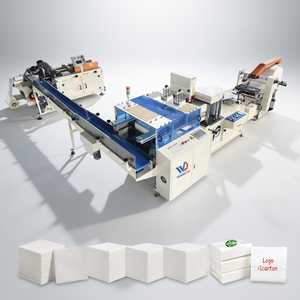
Automatic Table Napkin Paper Making Machine Line
View Specifications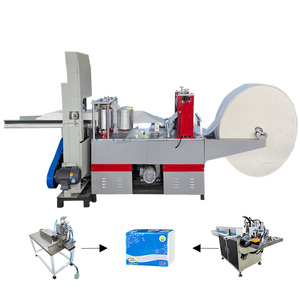
Mini Napkin Paper Making Machine for Small Business
View Specifications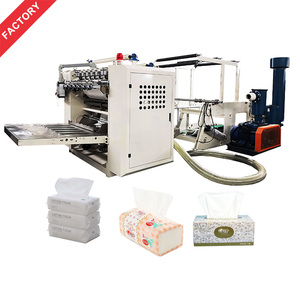
Automation 7 Line V Interfolded Facial Tissue Machine
View Specifications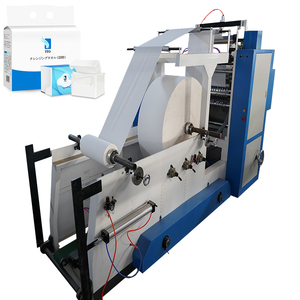
V Fold High-Speed Interfold Facial Tissue Line
View Specifications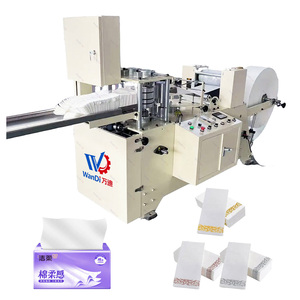
Restaurant Tissue & Napkin Making Equipment Unit
View Specifications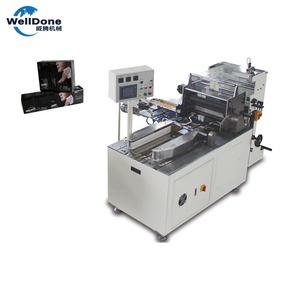
Portable Bamboo Paper Handkerchief Converting Machine
View Specifications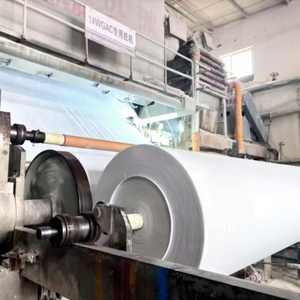
60 Tons/Day Automatic Facial Tissue & Toilet Paper Line
View Specifications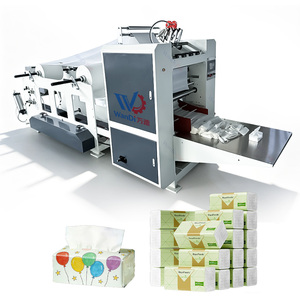
Full Automatic Z/V Fold Facial & Napkin Converting Line
View SpecificationsEngineering Leadership & OEM Manufacturing Infrastructure
Andina Heavy Tissue Machinery S.A. delivers high-precision converting platforms engineered for maximum Overall Equipment Effectiveness (OEE) and long-term operational reliability.
Tri-Base Manufacturing Scale
Spanning 10,000+ square meters across primary production centers in Shanghai, Foshan, and Chengdu, our ISO 9001 certified facilities house state-of-the-art CNC machining centers, automated assembly bays, and strict quality control stations.
In-House OEM Precision
Unlike asset-light equipment integrators, we perform 100% in-house mechanical design, structural fabrication, electro-technical panel wiring, and PLC motion control programming, backed by over 50 national invention and utility patents.
Global Commissioning & IoT
Serving tissue converters across 160+ countries, our international field engineering team delivers turn-key plant setup, operator training, and 24/7 remote IoT diagnostics to maximize continuous line runtime.
Technological Advancement Trends in Napkin Converting & Packaging
Analyzing key architectural shifts in commercial tissue processing machinery: Servo synchronization, high-definition embossing, and high-speed flow-wrapping automation.
1. Multi-Axis Servo Motion Architecture
Legacy napkin machines relied on complex mechanical gearboxes, line shafts, and chain drives, which suffered from mechanical wear, backlash, and lengthy product changeovers. Modern OEM factories have fully transitioned to multi-axis electronic servo control systems (such as Siemens S7-1500 Motion or Mitsubishi iQ-R series).
By dedicating individual servo drives to raw paper unspooling, embossing, longitudinal slitting, rotary folding, and transport vacuum belts, operators achieve millimeter-exact registration and toolless size changeovers via touchscreen HMI recipes in under 15 minutes.
2. Point-to-Point (PTP) Micro-Embossing
Commercial tissue buyers demand enhanced tactile softness, absorbency, and aesthetic brand differentiation. Advanced custom napkin converting lines integrate steel-to-rubber or steel-to-paper micro-embossing cylinders equipped with heating elements and pneumatic nip loading.
Point-to-Point (PTP) and nested embossing patterns bond 2-ply and 3-ply tissue sheets securely without requiring excessive chemical glues, retaining tissue bulk and softness while eliminating sheet separation during high-speed folding.
3. High-Speed Flow Wrapping & Soft Packing
Downstream napkin packaging technology has evolved from manual or semi-automatic bag loading to fully integrated, continuous-motion flow wrappers and soft-pack bundle wrappers. Running at speeds from 40 to 80 packs per minute, these units utilize rotary sealing jaws with precise PID temperature control.
Servo-driven flight bars match the precise velocity of folded napkin stacks, eliminating stack collapse, edge curling, or optical sensor misalignment during rapid film overwrapping.
Technical Benchmark: Legacy Mechanical vs. Modern OEM Servo Lines
| Performance Parameter | Legacy Mechanical Drive Lines | Andina Modern Servo-Driven OEM Lines |
|---|---|---|
| Maximum Production Speed | 600 – 1,000 sheets/min | 2,200 – 3,500 sheets/min |
| Format Changeover Time | 2 to 4 hours (Manual gear/cam swapping) | 15 to 25 minutes (HMI Recipe Driven) |
| Web Tension Accuracy | ±12% variance (Frequent web tearing) | ±1.5% dynamic control (Servo feedback) |
| Noise Level (Operational) | > 85 dBA (Heavy gear friction) | < 72 dBA (Direct-drive motors) |
| Energy Consumption per Ton | 140 – 180 kWh/ton | 95 – 120 kWh/ton (Regenerative braking) |
Future Global Procurement & Sourcing Trends
Key strategic considerations for napkin paper manufacturers, private label wholesalers, and tissue converting plant managers over the next 5 to 10 years.
Shift to Alternative Sustainable Fibers
Global environmental regulations and consumer preferences are driving rapid adoption of bamboo pulp, sugarcane bagasse, and recycled unbleached kraft fibers. Sourcing teams must prioritize custom OEM machines capable of processing varying tensile strengths, fiber lengths, and dust generation profiles without losing operational speed.
Total Cost of Ownership (TCO) Prioritization
Enterprise tissue wholesalers are shifting evaluation criteria from initial Capital Expenditure (CapEx) to lifetime Operational Expenditure (OpEx). Key metrics include power consumption, spare parts standardization (using off-the-shelf brands like Schneider, Omron, and SKF), and reduced maintenance labor requirements.
Turnkey Line Integration & Modular Design
Wholesalers no longer prefer piecemeal sourcing (buying folders from one supplier and packaging wrappers from another). The market strongly favors fully integrated turnkey solutions engineered under one roof, guaranteeing seamless handshake communication protocols between the converting unit, log saw, stacking machine, and flow wrapper.
Procurement & Technical FAQ for Global Wholesalers
Detailed answers to critical technical, operational, and commercial questions asked by professional tissue machinery buyers.
What custom OEM parameters can be configured for napkin paper converting lines?
- Folding Types: 1/4 fold, 1/8 fold, 1/6 fold, M-fold, Z-fold, and custom dispenser napkin folds.
- Embossing Patterns: Custom logo engraved steel rollers, border embossing, full-surface micro-embossing, and point-to-point (PTP) pneumatic units.
- Printing Units: 1 to 4 color flexographic printing modules with doctor blade ink metering and automatic web drying.
- Pack Size & Speed: Configurable stack counts (e.g., 50, 100, 250, or 500 napkins per pack) synced directly to single-roll or multi-bundle flow-wrapping systems.
How does your machinery ensure consistent folding precision on light GSM virgin or recycled tissue?
What lead time, shipping compliance, and installation support are provided for overseas buyers?
What routine maintenance intervals are required to maintain high OEE on napkin wrappers?
- Daily: Dust blower cleaning of paper fluff around optical tracking sensors and rotary folding blades.
- Weekly: Inspection and tension verification of timing belts, along with lubrication of main drive gear bearings.
- Monthly: Inspection of vacuum pump filters, heating element calibration on flow-wrapping seal jaws, and blade edge resharpening/honing.
Can a single production line run both bamboo tissue and traditional wood pulp tissue?
Request a Customized Technical Proposal & Quotation
Connect directly with our senior tissue machinery engineers to calculate required line capacities, discuss custom embossing patterns, and receive a comprehensive layout design tailored to your facility.
Send an Inquiry