Industrial Tissue Converting & Packaging Systems
Direct factory supply from China's leading OEM exporter. Synchronized servo integration, high-precision log saw cutting, and high-efficiency bundle packaging solutions.
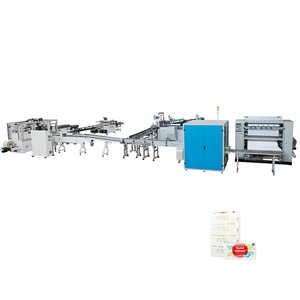
Automatic Box-Drawing Production Line Facial Tissue Folding and Cutting Machine
Fully integrated vacuum interfolding line featuring automated web tension control, dual-lane orbital log saw cutting, and servo-driven box packing.
View Product Details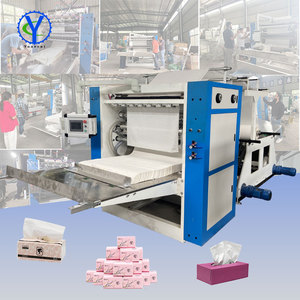
Automatic Facial Tissue Machine Tissue Paper Making Machine Fully Automatic
High-capacity tissue paper converting system engineered for continuous soft-pack or boxed tissue processing with zero-speed auto splicing.
View Product Details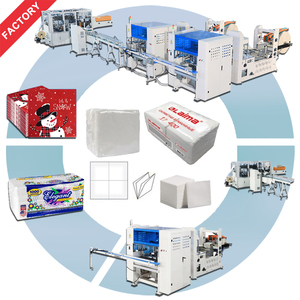
Automatic Tissue Paper Making Machine | Napkin & Toilet Paper Roll Line
Versatile multi-format production line handling napkin embossing, toilet roll rewinding, and flexible shrink bundling in one system.
View Product Details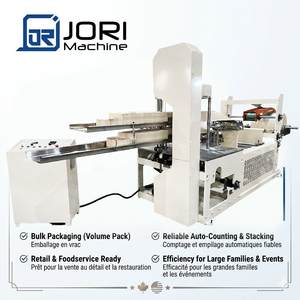
250x250 High Speed Napkin Maker Machine Soft Tissue Embossing Line
Speeds up to 2,200 sheets/min. Equipped with custom steel-to-rubber embossing rollers, rotary counting, and automatic film wrapper.
View Product Details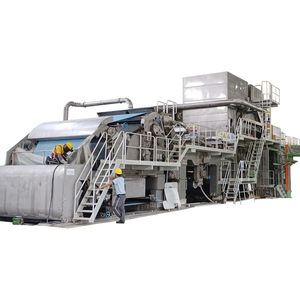
50-100 TPD Complete Toilet Tissue Paper Production Line Turnkey Solution
Heavy-duty turnkey paper mill converting solution complete with unwinding stands, perforating rewinders, log accumulators, and packaging.
View Product Details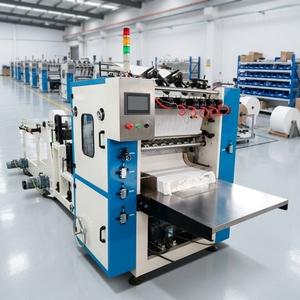
Facial Tissue & Disposable Face Towel Machine Line Fully Automatic
Designed for both dry tissue and heavy non-woven spunlace cotton face towels, integrated with precise cross-folding and bagging modules.
View Product Details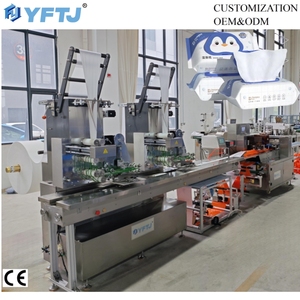
5-30pcs/pack Restaurant Napkin & Wet Wipes Making Machine
Multi-purpose converting machinery for pocket tissue, restaurant napkins, and travel wet wipe packs with automatic liquid dosing.
View Product Details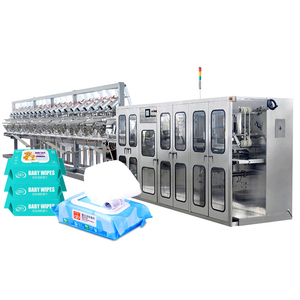
High Efficiency 30~120pcs Full Automatic Wet Wipe Production Line
High-speed 12-lane wet wipe converting system featuring online die-cutting, automated lid applicator, and flow-wrap sealing.
View Product DetailsEngineering Excellence in Tissue Converting & Packing Machinery
The global tissue paper converting market has undergone a structural transformation driven by rising hygiene awareness, expansion of commercial away-from-home (AfH) paper products, and the rapid growth of e-commerce channels. As global buyers look to source high-yield tissue processing equipment, China has emerged as the premier manufacturing hub for advanced tissue paper packing machines, facial tissue production lines, and automatic toilet roll rewinders.
Navigating the complex landscape of Chinese suppliers requires evaluating technical engineering depth rather than looking at initial machine prices alone. Enterprise buyers, tissue converters, and private-label manufacturers require high Overall Equipment Effectiveness (OEE), minimal downtime during changeovers, and precise motion synchronization. Andina Heavy Tissue Machinery S.A. has operated at the forefront of this industrial sector since 1993, backed by over three decades of mechanical innovation, three standardized production facilities spanning Shanghai, Foshan, and Chengdu, and an engineering network that services installations in over 160 countries.
Core Procurement Insight: Machine stability at high operational speeds depends directly on the mechanical mass of the frame and dynamic balance of rotating rollers. Systems built with heavy-duty annealed steel plates (20mm–30mm thickness) exhibit lower vibrational resonance, extending bearing life by up to 300% compared to lightweight structural tubing alternatives.
Why Top Global Paper Brands Partner with Andina Heavy Machinery S.A.
Our engineering philosophy centers on total manufacturing control. Unlike export trading intermediaries, Andina Heavy Tissue Machinery S.A. manages the full life cycle of equipment creation—from finite element analysis (FEA) structural design and high-precision CNC machining to PLC software programming and real-tissue factory acceptance testing (FAT).
- Triple Production Footprint: Operating dedicated manufacturing facilities in Shanghai (Qingpu Industrial Zone), Foshan, and Chengdu, totaling tens of thousands of square meters equipped with multi-axis CNC machining centers.
- Certified Engineering Framework: Full ISO 9001:2015 quality management compliance, international CE machinery safety certification, and an active portfolio of over 50 national patents covering interfolding geometry, log saw blade sharpening, and tension-free film feeding.
- Comprehensive Field Support: Remote IoT diagnostic capabilities combined with on-site commissioning engineers trained to handle mechanical installation, electrical panel configuration, and operator training worldwide.
Key Engineering Advantages & Technical Superiority
Our tissue packaging machinery is built around four fundamental engineering pillars designed to reduce operational cost per pack while maximizing line speed.
Multi-Axis Servo Synchronization
Replaces mechanical gearbox linkages with independent Siemens or Omron servo drives on every axis. Enables instant digital sheet length adjustments, reduces mechanical wear, and eliminates registration drift during rapid speed changes.
Adaptive Film Sealing Systems
Advanced sealing jaws accommodate diverse film compositions, including CPP, PE, BOPP, and newly developed 100% recyclable paper wrappers. Constant temperature controllers prevent film burn during line stops.
Intelligent Log Saw Sharpening
Orbital circular cutting blades feature auto-sharpening systems linked to cutting cycle counts. Automatically adjusts grinding wheel pressure and positioning to preserve clean tissue edge quality without burrs or dust accumulation.
Standardized Machinery Performance Metrics
Comparative specification matrix across core packaging and converting configurations for engineering evaluation.
| Equipment Category | Designed Speed Range | Paper Basis Weight (GSM) | Control Architecture | Primary Packaging Formats |
|---|---|---|---|---|
| Automatic Facial Tissue Line | 150 - 250 meters/min | 13 - 18 gsm (2-Ply / 3-Ply) | Siemens S7-1500 PLC + Motion | Soft-pack film, corrugated boxes |
| High-Speed Napkin Machine | 800 - 2,200 sheets/min | 14 - 22 gsm (1-Ply / 2-Ply) | Multi-axis servo + HMI Touch | Full-wrap PE film, paper band |
| Toilet Roll Rewinder Line | 200 - 600 meters/min | 15 - 24 gsm (1 to 4-Ply) | Bus-based servo drive system | Single roll wrapper, multi-roll pack |
| Wet Wipe & Non-Woven Line | 30 - 120 packs/min | 35 - 80 gsm (Spunlace) | Synchronized servo flow-wrap | Pillow bag with plastic lid/cap |
Future Procurement Trends in Tissue Converting & Packaging (2025–2030)
As paper mills and commercial converting plants update their equipment roadmaps, several technology vectors are defining the next decade of machinery procurement decisions:
1. Transition from Flexible Plastic Film to All-Paper Outer Wrapping
Regulatory mandates across the European Union, North America, and parts of Asia are forcing brand owners to reduce single-use plastic packaging. Modern tissue packing machines must handle paper-based wrapping materials without tearing or causing jams. Paper wrapping requires precise tension control and specialized hot-melt adhesive or ultrasonic sealing stations, as paper lacks the stretch recovery of polyethylene films.
2. OEE Telemetry & Remote IoT Diagnostics
Unplanned downtime on high-speed facial tissue or toilet roll lines can cost thousands of dollars per hour in lost throughput. Industrial purchasers are increasingly mandating edge-computing gateways and encrypted cloud connectivity. Modern equipment built by Andina Heavy Machinery S.A. incorporates real-time vibration sensors, thermal monitoring on main bearings, and remote PLC access. This allows off-site engineering teams to troubleshoot code or predict mechanical failure before a breakdown occurs.
3. High-Flexibility Modular Line Layouts
Consumer preferences shift rapidly between pocket handkerchief packs, retail facial tissue boxes, soft-pack bundles, and jumbo commercial rolls. Factory owners can no longer afford dedicated single-purpose production lines that take days to reconfigure. Modern procurement favors modular machinery architectures where folding units, log saws, bundlers, and case packers communicate over high-speed Ethernet protocols (EtherCAT or PROFINET), allowing format changeovers to be completed in under 30 minutes via recipes saved in the HMI screen.
Total Cost of Ownership (TCO) Metric: Electricity accounts for up to 15% of lifetime equipment costs. Modern servo-driven converting lines with regenerative energy recovery units return braking energy back into the factory grid, reducing electrical consumption by 18% to 25% compared to legacy line shaft machinery.
Total Cost of Ownership (TCO) Evaluation Framework for B2B Buyers
When requesting quotations from Chinese exporters and wholesalers, sourcing managers should apply a holistic TCO model rather than relying strictly on the initial FOB machinery price. A comprehensive evaluation framework includes:
- Capital Expenditure (CapEx): Initial machine price, custom embossing roller engraving, spare parts kits, and ocean freight logistics.
- Operational Expenditure (OpEx): Power consumption per ton of converted paper, pneumatic air consumption (m³/min), blade wear rates, and required operator headcount.
- Yield & Waste Rate: Percentage of raw paper trim loss during slitting and web transfer. High-end equipment maintains waste rates under 1.5%, whereas low-grade machinery can exceed 4% waste.
- Maintenance Downtime: Scheduled lubrication intervals, availability of standard off-the-shelf electrical components (e.g., Schneider, ABB, Sick), and lead time on custom CNC machined spare parts.
Frequently Asked Questions by Industrial Sourcing Managers
Detailed technical answers to common questions regarding line configuration, export logistics, voltage customization, and factory acceptance testing.
Ready to Upgrade Your Tissue Converting Capacity?
Consult directly with our senior application engineers to obtain a tailored machinery line proposal, plant layout diagram, and official factory-direct pricing structure.
Contact Us