High-Performance Tissue Converting Equipment
Explore our flagship tissue converting machinery, ranging from high-speed interfold napkin folders and flexographic multi-color printing units to fully automated toilet roll rewinding and packaging lines.
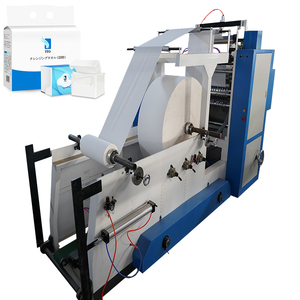
Vacuum absorption folding mechanism, continuous pneumatic parent roll loading, high OEE output.
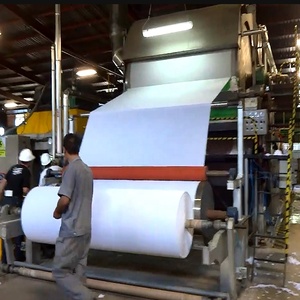
Heavy-duty paper pulp processing and jumbo roll formation with energy-efficient drying systems.
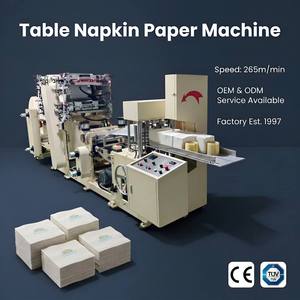
Anilox flexographic color printing with micro-embossing embossing roll, up to 900 pcs/min speed.
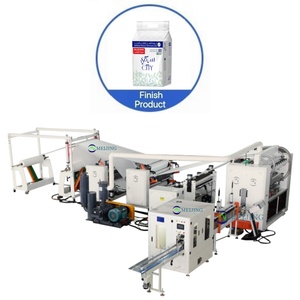
Multi-lane high capacity V-fold interfolding with auto log cutting unit integration.
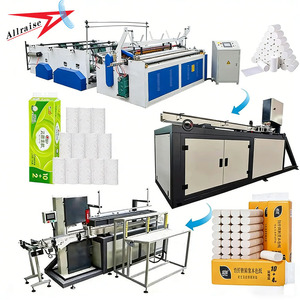
Pneumatic tail gluing, point-to-point embossing, automatic core loading, and high-speed wrapping.
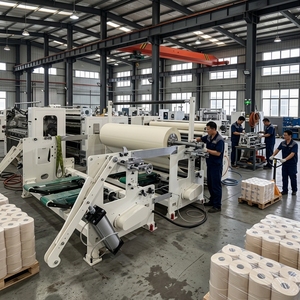
Turnkey plant setup from jumbo parent reel to finished retail multi-pack tissue rolls.
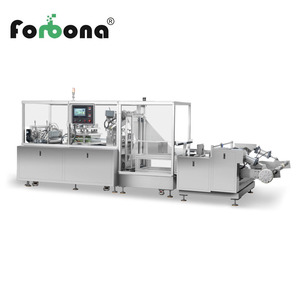
Full servo multi-axis motion control, automated liquid dosing, airtight flow-wrap sealing.
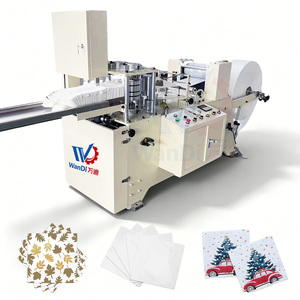
Dual-capability tissue converting line engineered for commercial AFH and retail demand.
Engineering Superiority: Why Global Converters Trust Andina S.A.
Founded in 1993, Andina Heavy Tissue Machinery S.A. has transformed tissue paper converting and packing equipment manufacturing through three decades of relentless R&D, precision CNC engineering, and international service deployment.
Triple Production Bases
Spanning over 100,000 m² of specialized manufacturing real estate in Shanghai, Foshan, and Chengdu, equipped with ultra-precision 5-axis CNC machining centers for drum grinding and component milling.
Multi-Axis Servo Synchronization
Replacing obsolete mechanical cam drives with Siemens & Mitsubishi motion controllers. Achieves high-speed kinematic precision up to 1,000 sheets/min with web tension drift within ±0.2mm.
50+ Patents & Global Standard Compliance
Fully certified under ISO9001:2015 quality management and European CE directives (EN 60204-1 safety compliance). Built-in heavy iron wallboards eliminate vibration during peak operational speeds.
Engineering Deep-Dive: Mechanical Architecture & Kinematics of Paper Napkin Converting
Paper napkin machinery manufacturing in China has transitioned from low-cost labor substitutes to ultra-high-precision automated systems competing directly with top European OEM brands (e.g., Fabio Perini, Hobema, OMET). To assist tissue factory buyers and plant engineers in evaluating converting equipment, this section details the core engineering components driving high-speed napkin production line efficiency.
Key Information Gain Metric: Overcoming the Thermal & Mechanical Vibration Barrier
At operational speeds exceeding 600 meters per minute or 1,200 napkins per minute, conventional iron frames experience harmonic resonance that causes embossing distortion and web snapping. Andina S.A. utilizes annealed 45mm solid ductile cast-iron side wallboards combined with dynamic balancing of all folding cylinders to absorb micro-vibrations, extending blade service life by 350%.
1. Unwind Stands & Tension Control Subsystems
Parent roll handling requires constant torque management as the paper roll diameter decreases from 1,500mm to core depletion. Modern napkin machines employ independent servo unwind drives linked to pneumatic dancer arms and ultrasonic diameter sensors.
- Grammage Processing Range: Accommodates 13 gsm to 28 gsm single-ply, 2-ply, or 3-ply tissue stock without web tearing.
- Closed-Loop Web Guiding (EPC): Infrared photo-electric edge alignment system maintains roll side-drift within ±0.15mm.
- Pneumatic Jumbo Roll Loading: Dual-cylinder hydraulic or pneumatic arms lift heavy parent reels up to 1,000 kg without overhead cranes.
2. Flexographic Printing Units (1 to 6 Colors)
Commercial and retail table napkins frequently require high-definition brand logos, promotional graphics, or full-color designs. Flexographic printing modules integrated into napkin folders feature:
- Ceramic Anilox Rollers: Laser-engraved ceramic Anilox rolls (200-600 LPI) ensure precise ink transfer and minimal dot gain.
- Chambered Doctor Blade Technology: Enclosed ink systems prevent solvent evaporation and guarantee color consistency across 100,000+ meters.
- Hot Air & Infrared Drying Inter-Deck Systems: Rapid moisture removal prevents ink bleeding when moving immediately to embossing and folding.
Technical Specifications Comparison: Standard vs. Advanced Napkin Converting Lines
| Performance Benchmark | Conventional Mechanical Napkin Machine | Andina High-Speed Full-Servo Napkin Line |
|---|---|---|
| Maximum Linear Speed | 150 – 250 meters/min (300-500 pcs/min) | 450 – 700 meters/min (900-1500 pcs/min) |
| Fold Formats Supported | Fixed 1/4 Fold or 1/8 Fold (Mechanical gear change) | Modular 1/4, 1/8, N-Fold, V-Fold, Z-Fold (Quick swap) |
| Embossing Nip Pressure | Manual hand-wheel spring adjustment | Pneumatic proportional pressure control with digital recipe recall |
| Overall Equipment Effectiveness (OEE) | 55% – 68% (High maintenance downtime) | 85% – 92% (Continuous 24/7 industrial running) |
| Web Edge Alignment Tolerance | ±1.5 mm | ±0.15 mm (Closed-loop photo-electric EPC) |
| Noise Level at Max Output | > 88 dB(A) | < 76 dB(A) (Helical gear drive + soundproof enclosure) |
Future Sourcing & Technological Trends in Napkin Machinery
The global napkin paper converting market is undergoing structural shifts driven by labor shortages, sustainable fiber adoption, and smart factory transformation. Procurement teams must anticipate these five trends before making capital expenditure (CapEx) commitments.
1. Transition to Full Servo Motion Kinematics
Traditional mechanical line shafts with hundreds of sprockets, chains, and bevel gears are rapidly being replaced by multi-axis servo motors. Independent electronic camming reduces mechanical wear, lowers power consumption by up to 28%, and enables instantaneous format changes via HMI touchscreen presets.
2. Sustainable Pulp & Bamboo Fiber Compatibility
With eco-conscious consumer demand surging, modern napkin folders must handle unbleached virgin pulp, 100% recycled fibers, non-woven spunlace materials, and rapid-growth bamboo fibers. Machines equipped with vacuum absorption folding and friction-free slitters prevent fiber shedding and dust buildup.
3. Industry 4.0 IoT & Predictive Maintenance
Leading Chinese exporters are embedding OPC-UA protocols and IIoT gateway controllers into PLC panels. Plant managers can track real-time OEE, monitor bearing temperatures via vibration sensors, receive automated blade wear alerts, and grant remote diagnostic access to Andina engineers worldwide.
4. Inline Automated Soft-Pack & Box Cartoning
Manual collection and hand-packing of napkins into polybags create bottlenecks that throttle converting speeds. Sourcing trends prioritize fully integrated automated lines where folded napkin logs pass directly into high-speed continuous flow-wrappers or automatic cartoners.
5. Computer Vision & Zero-Defect Inspection
High-resolution optical camera inspection systems installed after flexographic printing decks scan 100% of the web surface for ink splashes, alignment drift, embossing voids, or fiber holes. Defective napkin stacks are automatically ejected without stopping the machine.
Ready to Modernize Your Converting Plant?
Consult with Andina Heavy Machinery engineers to evaluate customized line configurations, layout footprints, and ROI projections.
Sourcing Guide: Total Cost of Ownership (TCO) & Supplier Evaluation Framework
When evaluating napkin machine manufacturers in China, initial purchase price (CapEx) accounts for less than 25% of the machine's total lifecycle cost. Operational expenditure (OpEx), power consumption, substrate waste, and spare parts availability dictate long-term profitability.
Risks of Low-Cost Machinery Options
- Thin Frame Vibration: Standard 15-20mm welded steel plates deform under continuous stress, leading to gear misalignment.
- Obsolete Relay Control: Non-branded microcontrollers lack global spare parts availability and lock buyers out of updates.
- Excessive Paper Trim Waste: Poor tension dampening causes edge tearing, incurring up to 8% higher raw material waste.
- Unregulated Safety: Lack of interlocking safety guards, emergency stop circuits, or CE compliance increases workplace liability.
The Andina Heavy Equipment Standard
- Solid Ductile Cast Iron Wallboards: 45mm thick precision-milled walls guarantee decade-long structural rigidity.
- Global Brand Components: Siemens PLC, Schneider electrics, SKF bearings, SMC pneumatics, and Weinview HMIs.
- Optimized Fiber Yield: Micro-tension sensors keep raw paper waste below 1.5% across entire jumbo rolls.
- Complete Factory Acceptance Testing (FAT): Every machine undergoes 72 hours of continuous tissue trial runs before export shipping.
Frequently Asked Questions for Paper Napkin Machinery Sourcing
Practical engineering and commercial answers to clear your technical specifications, plant requirements, and import logistics.