China Napkin Production Line Wholesaling: Industrial Engineering & Global Supply Chain Whitepaper
The global tissue paper converting industry is undergoing a structural transformation. Fueled by accelerating demand in commercial hospitality (HoReCa), eco-friendly disposable hygiene items, and high-density retail markets, commercial buyers are re-evaluating their capital expenditure (CapEx) frameworks. At the center of this shift is the procurement of high-speed napkin production lines from primary Chinese original equipment manufacturers (OEMs) and wholesalers.
Historically, purchasing tissue converting equipment required balancing low upfront costs against equipment durability, web tension stability, and long-term overall equipment effectiveness (OEE). However, the modern Chinese napkin machine manufacturing sector—led by established engineering firms like Andina Heavy Tissue Machinery S.A.—has redefined global market standards. By combining CNC precision manufacturing, servo-motor control architectures, closed-loop tension monitoring, and modular flexographic printing, China's leading wholesalers now deliver world-class machinery yields at a fraction of Western CapEx costs.
Core Information Gain Takeaway for B2B Buyers
When evaluating napkin production line wholesalers in China, procurement executives must look beyond basic speed ratings (sheets per minute). Real profitability depends on web handling physics, micro-embossing roll rigidity, dynamic pneumatic folding cylinder accuracy, and rapid changeover capabilities that minimize operational downtime during paper GSM transitions.
Corporate Engineering Infrastructure: Andina Heavy Tissue Machinery S.A.
Founded in 1993, Andina Heavy Tissue Machinery S.A. has operated as an industry benchmark in tissue paper converting and packaging automation for over three decades. Operating out of three specialized manufacturing centers located across Shanghai, Foshan, and Chengdu, Andina integrates heavy-duty structural machining with advanced electrical automation engineering.
Triple Production Footprint
10,000+ m² workshop area across Shanghai, Foshan, and Chengdu housing heavy-duty 5-axis CNC centers for total component quality control.
Rigorous Global Compliance
ISO9001 quality management system certification, full European CE safety compliance, and over 50 registered national technological patents.
160+ Export Destinations
Over 300 experienced engineers and overseas field engineers providing commissioning, operator training, and IoT telemetry diagnostic support worldwide.
By keeping every critical process in-house—from stress-relieved steel frame fabrication and laser alignment to multi-stage factory acceptance testing (FAT)—Andina eliminates third-party component defects, ensuring high uptime upon plant delivery.
Anatomy of a High-Performance Napkin Production Line
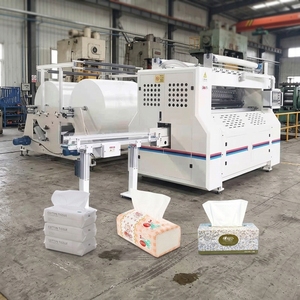
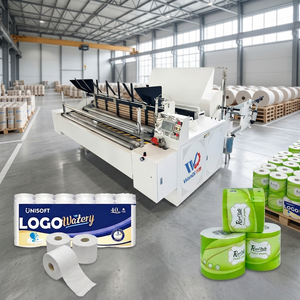
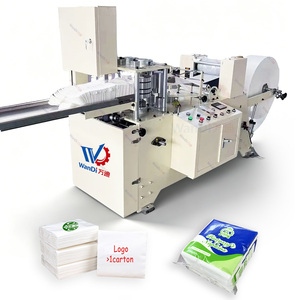
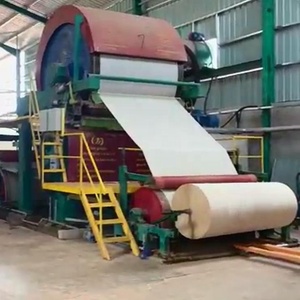
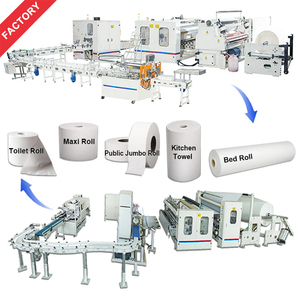
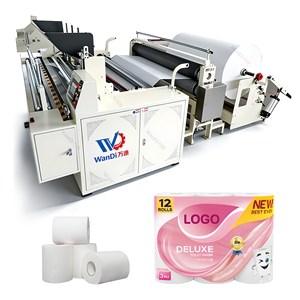
A modern automatic napkin production line is a complex assembly of mechanical, pneumatic, and electronic subsystems designed to convert parent tissue rolls into fully finished, folded, printed, and wrapped napkin stacks. Understanding these mechanical modules is essential for informed B2B procurement decisions:
1. Unwind Stand & Web Tension Management
The unwinding module holds jumbo tissue rolls (ranging from 13 to 28 GSM, 1-ply, 2-ply, or 3-ply). Premium lines utilize pneumatic wide-belt driven unwinding systems equipped with closed-loop tension sensors and automatic edge-alignment web guide controllers. This prevents paper web tearing during sudden acceleration cycles.
2. Flexographic Color Printing Units
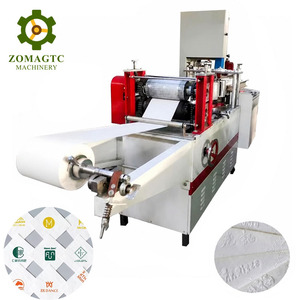
For custom restaurant branding and decorative serviettes, integrated flexo printing modules utilize ceramic anilox rollers and doctor blade chamber systems. This configuration delivers precise ink metering, rapid drying via infrared or warm air blowers, and zero ink bleed on absorbent cellulose paper substrates.
3. Precision Embossing Assembly
Embossing enhances napkin bulk, liquid absorbency, and tactile softness. B2B buyers must select the correct embossing configuration based on end-market requirements:
- Steel-to-Rubber Embossing: The standard industry setup, delivering clean border patterns and excellent ply-bonding for 2-ply napkins.
- Steel-to-Steel Embossing: Ideal for high-density, sharp aesthetic patterns with superior thermal resistance and long pattern life.
- Point-to-Point (P2P) / Micro-Embossing: Utilizes specialized micro-engraved rollers to create air pockets between plies, dramatically enhancing softness and bulk while reducing raw tissue consumption.
4. Rotary Folding Cylinder & Vacuum System
The core folding head translates the continuous paper web into standard geometric folds: 1/4 fold, 1/8 fold (book fold), M-fold, or specialized dispenser folds. High-speed lines rely on heavy-duty vacuum suction cylinders and hardened alloy folding knives to achieve operating speeds up to 3,000 sheets per minute without jams.
Future Procurement Trends in Napkin Machinery (2025–2030)
As sustainability regulations tighten and labor costs rise across North America, Europe, and Asia-Pacific, procurement managers must evaluate equipment against future technological shifts:
1. Processing Eco-Friendly Alternative Pulps
There is a massive market pivot toward non-wood fibers, specifically 100% virgin bamboo pulp, wheat straw, and sugar cane bagasse. Alternative fibers exhibit different tensile properties, dust dispersion levels, and fiber lengths compared to standard softwood kraft pulp. Next-generation production lines feature dust extraction hoods and adaptable roller nip pressure controls designed to process bamboo pulp without web breaks.
2. Industry 4.0 Telemetry & Remote Diagnostics
Modern napkin lines from leading wholesalers feature integrated Programmable Logic Controllers (PLC) with Ethernet/IP and cloud telemetry interface. Plant supervisors can track real-time OEE, monitor motor temperature and vibration anomalies, and receive automated maintenance alerts. Overseas technical teams from Andina can perform remote firmware updates and diagnostic troubleshooting via secure cloud gateways.
3. Fully Integrated Downstream Packaging
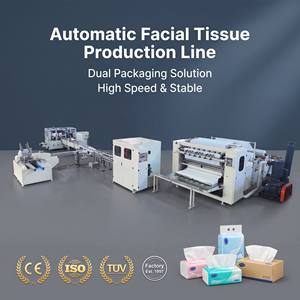
Manual handling of folded napkin stacks creates bottlenecks and introduces hygiene contamination risks. The market demand has shifted decisively toward turnkey automated packaging lines where the folding head directly feeds servo-driven soft-pack flow wrappers, box packers, or automatic bundling machines.