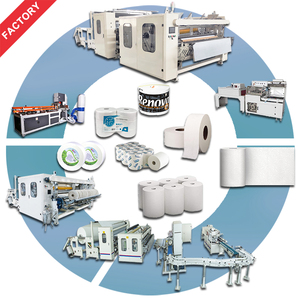
Featured Facial Tissue & Converting Machinery Solutions
Precision-engineered converting lines manufactured under ISO9001 and CE compliance for global tissue paper operations.
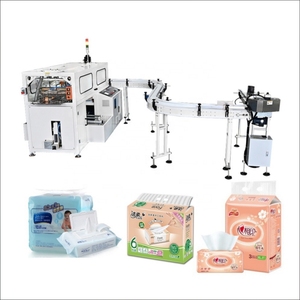
China Manufacturer Tissue Converting Machine Tissue Paper Making Machine Facial Tissue Bundle Packing Machine
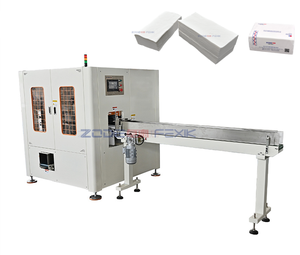
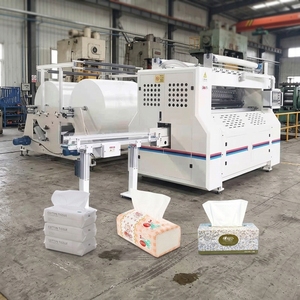
Automatic V Folded Hand Towel Paper Tissue Product Processing Machine Facial Tissue Paper Making Machine Line
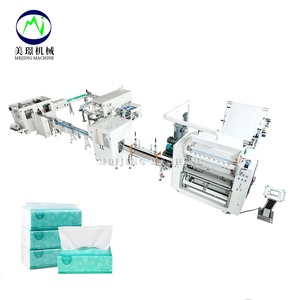
High Speed Complete Fully Automatic Paper Napkin Facial Tissue Making Machine Production Line Factory Price
Full-auto Facial Tissue Cutting Machine Automatic Hand Towel 300cut 1500KG Soft Facial Paper Slitting Machine
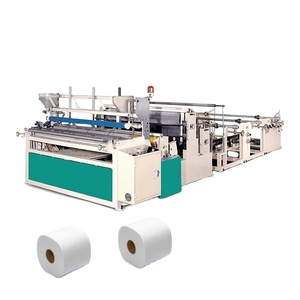
Toilet Paper Making Machine Toilet Tissue Roll Maker Machine Production Line Pulp Toilet Paper Rewinding Machine Manufacturer
New Fully Automatic High Speed Toilet Paper Winding Machine Production Line with PLC and Motor for Tissue Paper Making
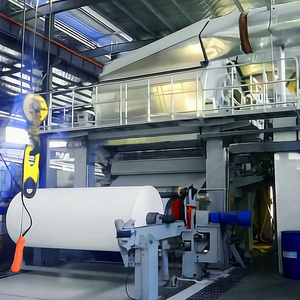
High Speed Full Toilet Paper Manufacturing Plant Crescent Former Facial Tissue Paper Making Machine
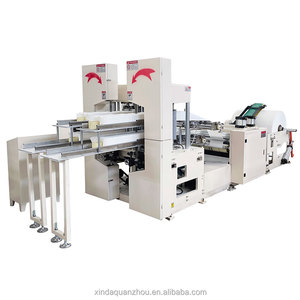
Factory Direct Automatic Paper Napkin Machine Tissue Napkin Production Line for Small Business
300+
Engineering Specialists
1. Strategic Overview: The Evolution of China’s Facial Tissue Interfolding Machinery Industry
Over the past three decades, the global paper tissue machinery market has undergone a dramatic structural shift. China has transitioned from a downstream importer of converting machinery to the dominant epicenter of high-speed, fully automated tissue paper processing technology. As tissue paper converting plants in North America, Europe, Latin America, and Southeast Asia seek to maximize Overall Equipment Effectiveness (OEE) while minimizing per-unit packaging costs, sourcing facial tissue interfolding machines directly from top-tier Chinese original equipment manufacturers (OEMs) has become a primary competitive strategy.
Modern facial tissue interfolding machines are complex, high-precision mechatronic systems. They must handle ultra-delicate paper webs ranging from 12 to 22 GSM per ply at continuous line speeds exceeding 200 meters per minute or 1,200 to 2,000 sheets per minute per lane. Achieving this performance requires seamless integration of pneumatic vacuum extraction, multi-axis servo synchronization, automated web tension regulation, and inline slitting/log saw cutting mechanisms.
Information Gain Insight: Modern high-speed interfolding operations no longer compete solely on mechanical linear speed. The core benchmark for operational profitability lies in sheet-count accuracy, tension consistency across variable GSM virgin/recycled stock, and seamless integration with downstream soft-pack or box cartoning units without intermediate manual intervention.
Technical Dynamics of Interfolding: V-Fold, Z-Fold, W-Fold, and L-Fold
Understanding interfolding mechanics is essential for plant engineers and procurement officers evaluating equipment. Interfolding involves interlocking continuous sheets of paper tissue so that pulling one tissue automatically presents the edge of the next sheet from the dispenser. Chinese manufacturing leaders engineered modular folding heads capable of producing various fold styles:
- V-Fold (Single-Fold / Interfolded): Characterized by a 1/2 fold geometry. Highly robust, simple to maintain, and standard for retail box and soft-pack facial tissues.
- Z-Fold (Multi-Fold): Features a 1/3 overlapping structure, providing smoother, pull-by-pull dispensing that prevents multiple sheet dragging. Preferred for premium institutional and commercial tissues.
- W-Fold: A 1/4 sheet folding configuration engineered for high-density, multi-ply soft facial tissues requiring superior softness and volumetric bulk.
Vacuum Air-Adsorption Folding
Utilizes multi-chamber vacuum rollers with variable pressure zoning to secure paper edges at high web speeds, eliminating paper tearing and static buildup.
Multi-Axis Servo Synchronization
Individual motion controllers drive unwind stands, embossing cylinders, folding rolls, and slitting blades, maintaining web alignment within ±0.2mm tolerances.
Integrated Log Saw Slitting
Continuous orbital log saws equipped with automatic CBN diamond grinding wheels ensure crisp, lint-free edge cuts without crushing tissue stacks.
2. Engineering Deep Dive: Vacuum Interfolding vs. Mechanical Folding Architecture
When selecting a supplier from China, procurement engineers must evaluate the structural engineering of the folding head assembly. The industry employs two primary technological approaches: Mechanical Jaw Folding and Vacuum Absorption Folding.
| Parameter / Feature |
Vacuum Interfolding Technology |
Mechanical Jaw Folding Technology |
| Maximum Line Speed |
180 – 220 m/min (Up to 2,000 sheets/min/lane) |
80 – 120 m/min |
| GSM Compatibility Range |
11.5 GSM to 24 GSM (Virgin, Bamboo, Recycled) |
14 GSM to 22 GSM |
| Web Tension Control |
Pneumatic floating dancer roll + closed-loop load cells |
Manual mechanical friction drag |
| Noise Level Operational |
< 78 dB(A) (With acoustic enclosure) |
> 85 dB(A) |
| Maintenance Interval |
Extended (Direct-drive servo gearboxes, low friction) |
Frequent (Mechanical cams, levers, wear pins) |
| Packaging Line Integration |
Direct connection to automatic log saws & bundlers |
Often requires semi-manual transfer buffers |
Web Control and Embossing Unit Innovations
High-end Chinese facial tissue production lines incorporate steel-to-rubber or steel-to-steel embossing units. Advanced micro-embossing rolls create localized fiber bonding, expanding sheet bulk while retaining surface softness. Edge-embossing units use pneumatic pressure cylinders to weld multi-ply paper layers together along the side margins, preventing ply separation during high-speed vacuum folding and downstream wrapping.
To accommodate fluctuations in parent roll quality—such as caliper variations, out-of-round rolls, or moisture gradients—top Chinese suppliers integrate real-time tension feedback loops. Sensor-driven magnetic powder brakes or vector AC servo motors dynamically adjust unwind torque, preventing sheet breaks and reducing machine downtime.
3. Global B2B Procurement Trends in Facial Tissue Manufacturing (2025–2030)
As retail trends shift and operational costs increase worldwide, international tissue converters are modifying their capital expenditure strategies. Sourcing teams analyzing Chinese manufacturing capabilities should consider four key market trends:
A. Transition from Rigid Box Packaging to Flexible Soft-Pack Bundling
Environmental regulations and shipping costs are driving a surge in consumer demand for soft-pack facial tissues wrapped in thin recyclable poly films or paper films. Soft packs reduce outer packaging volumetric weight by up to 40% and raw packaging costs by over 60% compared to traditional cardboard box packaging. Leading Chinese machinery suppliers now design integrated production lines that link vacuum interfolding units directly to fully automatic high-speed soft-pack wrapping machines and multi-pack bundle wrap systems.
B. Adoption of Non-Wood Substrates (Bamboo & Sugarcane Bagasse Pulp)
With ESG compliance taking center stage, tissue paper manufacturers are substituting virgin wood pulp with bamboo fiber and bagasse pulp. Bamboo fibers possess different tensile strengths, stiffness metrics, and dust generation profiles during high-speed folding. Leading Chinese machinery factories are optimizing vacuum airflow profiles, knife angles, and static eliminator bars to process 100% bamboo pulp tissue without generating excessive lint or pinhole tearing.
C. Smart Factory Integration: SCADA, PLC IoT & Remote Diagnostics
Modern B2B purchasers demand production lines equipped with Industry 4.0 architecture. Remote diagnostics enable factory engineers in China to monitor drive status, PLC alarm logs, thermal camera sensor readings, and servo torque curves in real time across plants located in North America, Europe, or Africa. Remote firmware updates, predictive maintenance alerts for bearing wear, and automated OEE calculation modules are becoming standard features on premium Chinese converting lines.
D. Total Cost of Ownership (TCO) vs. Initial CapEx
While European machinery historically carried a substantial price premium, Chinese manufacturers now offer equipment that achieves 90-95% of European production speeds at approximately 30-40% of the capital cost. This cost differential drastically shortens the Return on Investment (ROI) cycle—typically reducing payback periods from 5–7 years down to 14–24 months for greenfield tissue production projects.
4. Manufacturer Authority & Enterprise Advantages: Andina Heavy Tissue Machinery S.A.
When selecting a long-term supply partner in China, technical specifications tell only half the story. Practical manufacturing capabilities, engineering heritage, and global service footprints are vital factors in ensuring project success. Andina Heavy Tissue Machinery S.A. stands as a premier enterprise in China's tissue paper converting machinery sector.
3 Decades of Engineering Focus
Founded in 1993, with over 30 years dedicated exclusively to tissue paper converting, rewinding, folding, and automated packaging machinery engineering.
Global Footprint in 160+ Countries
Over 1,500 active converting production lines installed across Europe, the Americas, the Middle East, Africa, and the Asia-Pacific region.
Certified Rigorous Quality Management
Fully certified under ISO9001 quality management systems and European CE safety standards, supported by 50+ national utility and invention patents.
Integrated In-House CNC Manufacturing Facilities
A major risk when buying industrial machinery from overseas is relying on outsourced component machining, which leads to quality inconsistencies and fitment issues during high-speed operation. Andina Heavy Tissue Machinery operates three manufacturing bases located in Shanghai, Foshan, and Chengdu, spanning over 10,000 square meters of specialized workshop space.
Equipped with state-of-the-art multi-axis CNC machining centers, high-precision grinding machines, and automated dynamic balancing rigs, Andina manufactures critical components—including vacuum folding cylinders, embossing rollers, knife shafts, and gear transmissions—in-house under strict quality tolerances. Prior to dispatch, every machine undergoes continuous 72-hour dry-run and wet-run factory acceptance testing (FAT) using real tissue stock to guarantee plug-and-play installation upon arrival at the client's facility.
5. Technical & Procurement Frequently Asked Questions (FAQ)
Detailed technical answers addressing core considerations for machinery purchasers, plant managers, and tissue business investors.
What parameters determine the speed and capacity choice for a facial tissue interfolding line?
Target capacity depends on three main variables: the width of the parent roll unwinder (commonly 2 to 14 lanes, or 420mm to 2800mm working width), the operating mechanical speed (meters per minute), and downstream packaging line speeds. For instance, a 6-lane vacuum interfolding line operating at 180 m/min yields roughly 8,000 to 10,000 boxes/soft-packs per 8-hour shift, depending on sheet count (e.g., 100 or 150 count per pack).
How does the interfolding machine handle changes in tissue paper ply and GSM?
Andina's vacuum folding machinery features adjustable vacuum chamber valve plates and variable frequency drive (VFD) vacuum pumps. Operators can adjust vacuum suction intensity via the main HMI touchscreen when switching between 2-ply 13 GSM virgin wood pulp paper and 3-ply 16 GSM bamboo paper. Tension dancer arms automatically recalibrate braking torque to ensure smooth web feeding without sheet stretching or tearing.
Can a single facial tissue production line handle both soft-pack wrapping and hard-box cartoning?
Yes. By installing a modular dual-diverter transfer conveyor directly after the orbital log saw cutting unit, tissue logs can be routed to either an automatic soft-pack film wrapping machine or a box cartoning machine. This allows tissue converters to quickly pivot production based on retail market demand without purchasing two separate interfolding heads.
What electrical specifications, pneumatic requirements, and floor space are required for installation?
A standard 6-lane full-auto interfolding, slitting, and wrapping line requires a 380V/3Phase/50Hz (or customized 220V/440V 60Hz) electrical supply with a total connected power of approx. 45 kW to 75 kW (including vacuum pumps). Compressed air demands range from 0.6 to 0.8 MPa with a supply volume of 1.2 m³/min. Required floor space typically ranges from 18 to 25 meters in length and 4 to 6 meters in width.
What spare parts and routine maintenance schedules are required for continuous operation?
Key wear components include log saw circular blades, diamond sharpening stones, vacuum valve seal strips, perforating blades, and timing belts. Routine maintenance involves daily dust cleaning via blowers, weekly lubrication of linear slide blocks and bearing blocks, and monthly inspection of timing belt tension and blade sharpness. A standard 2-year wearable spare parts kit is included with each turnkey line shipment.
What international technical support, installation guidance, and commissioning services are provided?
Andina provides comprehensive overseas commissioning services. Experienced field engineers are deployed on-site to handle electrical hookups, mechanical alignment, FAT verification, and operator training. Furthermore, all machines feature integrated industrial IoT routers, enabling factory technicians in China to perform real-time diagnostics, software tuning, and PLC troubleshooting online 24/7.
Accelerate Your Tissue Converting Productivity
Consult with our senior application engineers to receive custom technical drawings, complete line specifications, and factory-direct pricing tailored to your production targets.
Get a Quote