High-Performance Napkin & Tissue Converting Solutions
Explore our flagship automated tissue rewinders, V/Z-fold facial tissue folders, and servo-driven napkin manufacturing lines engineered for maximum OEE.
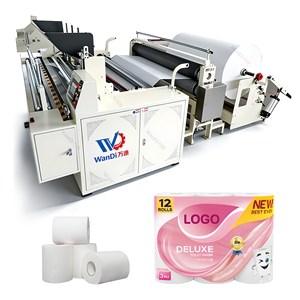
1575/1800/2200 mm Automatic Tissue Rewinding Machine
Heavy-duty toilet roll & paper towel rewinder tailored for commercial startups and high-capacity converting lines.
View Product Specs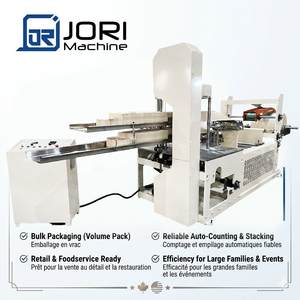
250x250 High Speed Napkin Manufacturing Line
Integrated soft tissue & napkin making system featuring color printing, steel-to-steel embossing, cutting, and automatic packing.
View Product Specs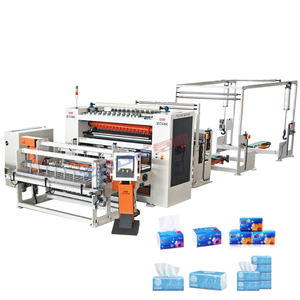
ZODE Automatic Facial Tissue V Folding Machine
High-speed 130m/min facial paper V-folding machine with precision vacuum absorption and pneumatic parent roll lifting.
View Product Specs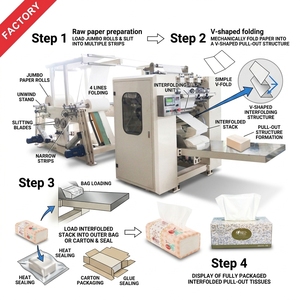
Dual-Function Facial Tissue & Toilet Paper Unit
Multi-purpose converting machinery designed for versatile mill operators producing both rolled and folded paper goods.
View Product Specs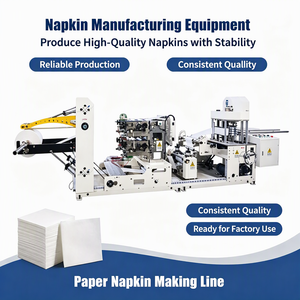
1/4 Folding Table Napkin & Interfold Machine
Engineered for HoReCa and restaurant table napkin manufacturing with tight square folding accuracy and soft embossing touch.
View Product Specs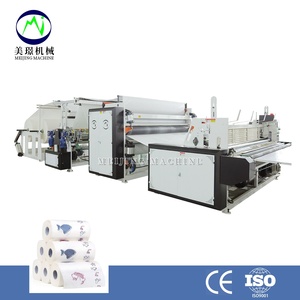
Siemens Control Glue Lamination Towel Line
Advanced kitchen towel and toilet roll converting machine equipped with Siemens PLC, point-to-point glue lamination, and automated slitting.
View Product Specs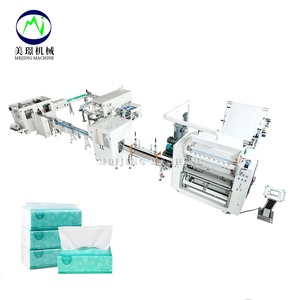
Automatic V-Folded Hand Towel Processing Line
Heavy-duty interfold hand towel machinery designed for commercial washroom paper suppliers requiring continuous high output.
View Product Specs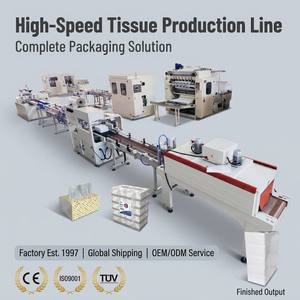
Servo-Controlled V-Fold Facial Tissue Box Line
Fully automated box-pack facial tissue line integrated with servo motion control, log saw cutting, and automatic cartoning units (CE ISO).
View Product SpecsWhy Top Global Brands Partner with Andina Heavy Tissue Machinery S.A.
Three decades of engineering excellence, vertical integration, and deep tissue converting domain knowledge.
Industrial Legacy and In-House Production Capabilities
Since 1993, Andina Heavy Tissue Machinery S.A. (Andine Tissue Machine) has established itself as an authoritative global manufacturer of complete paper converting, napkin folding, toilet roll rewinding, and high-speed packaging equipment. Operating out of three major production bases in Shanghai, Foshan, and Chengdu spanning over 10,000 square meters, our manufacturing ecosystem integrates heavy precision CNC machining centers, automated electrical assembly bays, and rigorous Quality Control (QC) testing laboratories.
Unlike regional brokers or assembly-only outfits, every critical machine subsystem—from laser-engraved steel embossing cylinders and pneumatic folding claws to multi-axis servo drives—is designed, machined, and calibrated in-house. Supported by a dedicated workforce of over 300 technical specialists, mechanical designers, and automation engineers, our equipment carries full ISO certification and European CE accreditation, holding over 50 national patents in paper handling, vacuum folding control, and dynamic tension management.
Engineering Trends in Automatic Napkin Machine Manufacturing
Understanding mechanical evolution, motion control shifts, and embossing physics to optimize your tissue converting plant.
1. Shift from Mechanical Cam Driving to Multi-Axis Servo Automation
Traditional automatic napkin folding machines relied heavily on mechanical cams, chain transmissions, and physical gearboxes. While cost-effective initially, legacy mechanical systems suffer from mechanical wear, high maintenance downtime, phase misalignment at speeds above 600 sheets/min, and lengthy product changeover times.
Modern Chinese tier-1 factories have fully transitioned to Siemens, Yaskawa, or Schneider multi-axis servo driving architectures. By equipping unwinding reels, embossing units, rotary counting cylinders, and folding boards with dedicated, electronically synchronized servo motors, converters achieve unprecedented benefits:
- Digital Phase Adjustment: Change napkin dimensions (1/4 fold, 1/6 fold, 1/8 fold) or print alignment directly via the HMI touchscreen without swapping mechanical gears.
- Constant Web Tension Control: Load-cell feedback continuously adjusts unwinding speeds to prevent tissue web snapping, allowing smooth operation even with low-GSM recycled paper stock.
- Reduced Operational Noise & Wear: Eliminating heavy gearboxes reduces factory decibel levels below 75 dB and extends operational lifecycle by over 40%.
2. Embossing Science: Steel-to-Steel vs. Steel-to-Rubber & Point-to-Point
Embossing serves a dual purpose: enhancing tactile softness/bulk visual appeal and bonding multiple tissue plies together without glue. Procurement managers must carefully select embossing roller configurations based on target consumer market segments:
| Embossing System | Core Mechanism | Best Product Applications | Key Advantage |
|---|---|---|---|
| Steel to Rubber | Hardened engraved steel roller pressing against high-durometer rubber roller. | Standard 1-ply/2-ply table napkins, cocktail napkins (250x250mm). | Cost-effective tooling, easy operator setup, gentle on lighter tissue stock. |
| Steel to Steel | Matched male-female CNC engraved steel rollers with thermal heating options. | High-end restaurant napkins, embossed logo paper, 3-ply dinner napkins. | Ultra-crisp design definition, high durability, superior ply-bonding strength. |
| Point-to-Point (P2P) | Nested micro-embossing protrusions combined with water/glue micro-application. | Premium 2-ply/3-ply absorbent kitchen paper towels & soft napkins. | Maximizes paper bulk volume (+30%) and water absorption without adding weight. |
Key Purchasing Trends Shaping the Global Napkin Market
Anticipating material shifts, automation requirements, and ESG compliance for paper wholesalers and converters.
1. Eco-Friendly Fibers & Variable Raw Material Flexibility
Driven by single-use plastic bans and corporate sustainability commitments, commercial paper buyers are rapidly diversifying away from traditional virgin wood pulp toward 100% bamboo fiber, sugarcane bagasse, and high-ratio recycled pulps. Bamboo fiber features shorter fibers and distinct tensile behavior, requiring automatic napkin machines with dynamic pneumatic tension braking, anti-static bar integration, and self-cleaning dust extraction hoods to prevent paper dust accumulation at high speeds.
2. End-to-End Line Integration: From Parent Roll to Robot Case Packing
Global labor costs continue to rise. Wholesalers and factory buyers are no longer seeking stand-alone napkin folding tables. Procurement preferences have decisively pivoted toward turnkey, fully automated tissue manufacturing lines:
Pneumatic Jumbo Roll Unwinding → Web Tensioning & Edge Alignment → Multi-Color Flexographic Printing → Steel-to-Steel Embossing → Vacuum Rotary Folding → Automatic Saw Cutting → Inline Flow Wrapping / Soft Pack Wrapping → Robotic Case Packing & Palletizing.
Integrating IoT smart gateway modules enables remote equipment visualization, predictive maintenance alerts, and seamless factory execution system (MES) integration via OPC-UA protocols.
3. Total Cost of Ownership (TCO) & Energy Savings Evaluation
When evaluating Chinese napkin machine suppliers, leading international buyers look far beyond initial machinery purchase price (CAPEX). Total Cost of Ownership (TCO) accounts for kw/h power consumption per ton of paper, vacuum pump efficiency, spare parts interchangeability (standardized ISO components), and scrap paper waste ratios. Modern servo-driven converting lines reduce power consumption by up to 25% compared to legacy motor-driven lines while keeping scrap rates under 1.5%.
Frequently Asked Questions (FAQ)
Detailed engineering and commercial answers for plant managers, procurement agents, and paper converting entrepreneurs.
Output varies by machine architecture. Standard single-lane mechanical napkin folders run between 500 to 800 sheets per minute. Advanced multi-lane servo automatic napkin machines (e.g., 4-lane, 6-lane, or 8-lane interfold systems) produce between 2,500 to 4,000 napkins per minute with inline automatic slitting and packaging.
Our automatic napkin machines handle tissue paper base weights from 13 gsm to 28 gsm per ply, supporting 1-ply, 2-ply, and 3-ply configurations. Compatible paper stocks include 100% virgin wood pulp, bamboo pulp, sugarcane bagasse, and recycled tissue paper jumbo rolls.
Yes. While specific mechanical folding heads are dedicated to specific finished square sizes (e.g., 230x230mm, 300x300mm, 400x400mm), servo-driven models feature modular folding boards and adjustable cutting knives, allowing quick changeovers between 1/4 fold, 1/6 fold, 1/8 fold, and dispenser interfold formats.
Andina Heavy Tissue Machinery S.A. provides comprehensive global support across 160+ countries, including onsite installation, engineer dispatch, PLC remote network diagnostics over secure VPN, full operator training, and lifetime factory-direct spare parts supply.
Our optional flexographic printing modules (1 to 4 colors) utilize water-based eco-inks and rubber/anilox rollers to print customized brand logos, restaurant patterns, or seasonal artwork directly onto the tissue web prior to embossing and folding, featuring fast infrared ink-drying tunnels to eliminate smudged graphics.
Please specify your target finished napkin dimensions (unfolded size & folded format), number of plies, tissue base weight (GSM), required production output (tons per shift or sheets/min), embossing preference (steel-to-steel/steel-to-rubber), and packaging style (soft plastic wrap or box cartoning).
Ready to Upgrade Your Tissue Converting Plant?
Consult with our senior machinery engineers today. Receive a custom production line layout, detailed ROI analysis, and factory-direct wholesale pricing within 24 hours.
Get a Quote