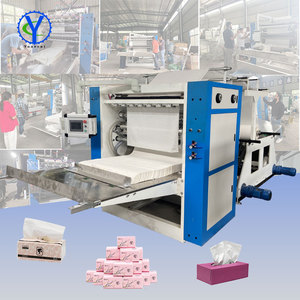
Factory Direct Machinery Catalog
Featured Tissue Converting & Packaging Lines
Explore our CE-compliant, servo-driven equipment engineered for high OEE, precise tension control, and flexible soft-pack or carton configurations.
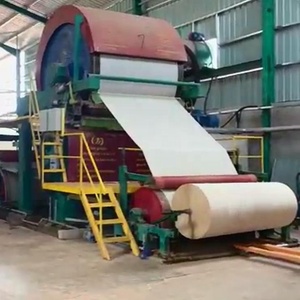
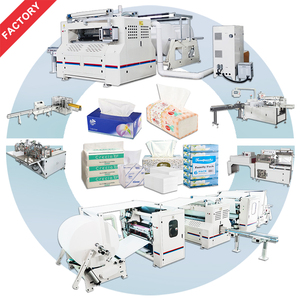
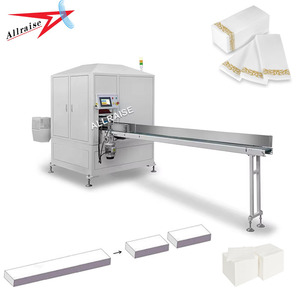
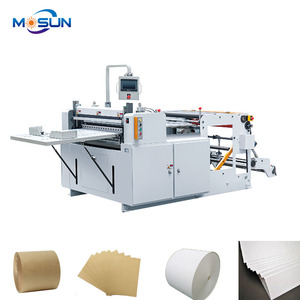
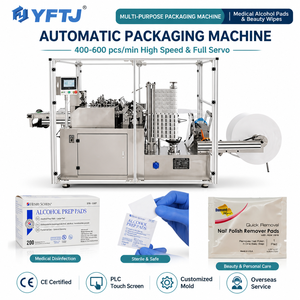
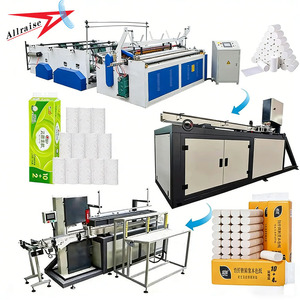
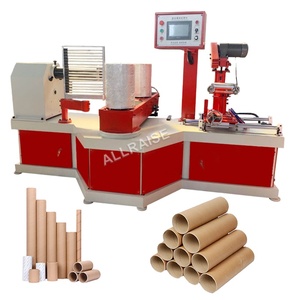
30+
Years Machinery Innovation
160+
Global Export Markets
50+
National Tech Patents
10,000m²
CNC Machining Workshop
300+
Specialized Engineers
Technical White Paper: High-Speed CE Certified Facial Tissue Converting Architecture
In modern tissue converting engineering, achieving uninterrupted high-speed operation while preserving paper fiber integrity requires advanced mechanical design, precision pneumatic web tension management, and real-time electronic synchronization. A CE-certified facial tissue converting line integrates raw jumbo roll unwinding, steel-to-rubber or steel-to-steel embossing, rotary vacuum interfolding (V-Fold/Interfold), high-speed orbital log saw cutting, and automated flow-wrapping into a single cohesive manufacturing ecosystem.
Information Gain Highlight: Legacy mechanical converting lines rely heavily on chain drives and mechanical cams, causing mechanical play, tension fluctuation, and dust accumulation at speeds above 800 sheets/min. Modern CE-compliant lines incorporate multi-axis Siemens or Yaskawa servo drives with absolute encoders, maintaining precise folding alignment at speeds exceeding 2,200 sheets/min per lane.
1. Jumbo Roll Unwinding & Constant Pneumatic Tension Control
The engineering quality of a facial tissue converting line begins at the unwind stand. Raw parent rolls ranging from 13 g/m² to 22 g/m² tissue paper are sensitive to web tension variations caused by roll out-of-roundness or sudden acceleration. Our factory incorporates independent flat-belt unwinding drives equipped with closed-loop load cell feedback. Variable frequency drives (VFDs) dynamically adjust unwind belt torque to maintain web tension within ±2% tolerance, preventing micro-tears during high-speed feeding.
2. Vacuum Folding Mechanisms: V-Fold, Interfold, and Z-Fold Mechanics
The core converting step utilizes high-precision vacuum suction folding cylinders. Solid steel helical folding rollers, manufactured via multi-axis CNC machining centers, feature micro-drilled vacuum distribution channels. As paper plies pass through the slitting unit, alternating vacuum timing valves pull folded tissue sheets onto the counter-rotating cylinders, creating seamless V-fold (interfolded) strips. This non-contact pneumatic folding design minimizes static electricity build-up, reduces tissue lint production, and guarantees perfect sheet-to-sheet interlock for smooth pull-out in end-user dispensers.
3. Orbital Log Saw Cutting & Automatic Servo Infeed Synchronization
Once tissue strips are continuously folded, they form long "logs" that require cutting into discrete facial tissue lengths. Our CE certified single-channel and multi-channel log saws utilize high-speed circular grinding blades crafted from alloy tool steel. Equipped with automated CBN grinding wheel dressers, the blade sharpens continuously while running. A servo-driven push clamp system synchronizes log advance with blade rotation, eliminating edge deformation and delivering clean, square cut faces across 100% of finished tissue packs.
Performance Benchmark: Legacy Mechanical vs. CE Servo-Driven Lines
| Performance Metric | Legacy Mechanical Lines | Andina CE Certified Servo Lines | Operational Value Gain |
|---|---|---|---|
| Line Speed (Sheets/Min/Lane) | 600 – 900 sheets/min | 1,800 – 2,500 sheets/min | +170% Output Capacity per Footprint |
| Drive Architecture | Common gear shaft & belt drive | Multi-axis independent servo system | Zero backlash, dynamic pitch adjustment |
| Unwind Tension Control | Manual friction band brake | Closed-loop load cell VFD control | Eliminates web breaks; runs light tissue plies |
| Changeover Time (Pack Count) | 2.5 – 4.0 Hours | 15 – 30 Minutes (Recipe Memory) | Drastic reduction in plant downtime |
| CE Safety Compliance | Basic metal guarding | ISO 13849 Safety Relays & Light Curtains | Full operator protection & EU market access |
Market Analytics & Strategic Sourcing
Global Procurement Trends in Tissue Converting Equipment
Key technological directives shaping capital expenditure decisions for commercial tissue converters worldwide over the next decade.
1. Transition to Bamboo & Non-Wood Pulp Fibers
Global tissue producers are expanding raw material usage beyond virgin wood pulp to include sustainable bamboo pulp, sugarcane bagasse, and recycled fibers. Bamboo fibers possess shorter elasticity profiles and higher tensile variation. B2B buyers now mandate tissue lines equipped with ultra-sensitive magnetic tension sensors and variable-profile embossing rollers that handle non-wood fibers without tearing or ply-delamination.
2. Fully Integrated IoT & Remote OEE Monitoring
Modern tissue mills no longer purchase standalone converting units in isolation. The industry baseline demands unified SCADA communication protocol (OPC-UA/MQTT). Real-time tracking of line efficiency (OEE), automatic fault diagnosis, predictive maintenance alerts for log saw blade wear, and remote factory debugging via encrypted cloud connections are now mandatory RFQ requirements.
3. Plastic-Free & Recyclable Soft-Pack Film Wrapping
With international regulations banning single-use non-recyclable plastics, packaging equipment must process eco-friendly bio-degradable PE films, ultra-thin CPP, and paper-based wrapping substrates. Servo wrappers must maintain precise temperature control across sealing jaws to prevent film burn-through or inadequate pack hermetic seals.
Future Technology Evolution Roadmap in Tissue Machinery Engineering
The tissue manufacturing sector is undergoing rapid transformation driven by automation, energy decarbonization, and workforce shift towards automated line management. Industry 4.0 paradigms are redesigning converting line modularity.
A. Zero-Operator Roll Splicing Systems
Unplanned downtime during parent roll changeovers accounts for up to 15% of total production loss in continuous tissue operations. Future-proof converting lines incorporate automatic flying lap splicers that combine tailing roll and leading-edge roll webs at full production speed (up to 300 m/min). Ultrasonic sensor arrays align web edges within millimeter accuracy, ensuring unbroken continuous feeding into the folding head.
B. AI Visual Quality Inspection & Embossing Alignment
Deep-learning vision inspection systems installed downstream from the embossing unit continuously scan tissue plies for pinhole defects, fiber clumps, edge raggedness, and pattern misregistration. By comparing live images with baseline CAD models, the AI system instantly signals automated tension dampers to adjust micro-gaps between embossing rolls, guaranteeing uniform tactility across every production shift.
C. Modular Plug-and-Play Line Customization
E-commerce fulfillment demands higher product flexibility, forcing manufacturers to switch quickly between 50-sheet soft packs, 150-sheet box packs, and institutional cube packs. Next-generation line design uses standardized mechanical bays with uniform CANopen bus routing, enabling tissue plants to insert or bypass secondary packaging modules (e.g., bundling wrappers, case packers, robotic palletizers) in minimal time.
Manufacturing Authority & Reliability
Why Direct Global Buyers Partner with Andina Machinery
Rooted in 30+ years of tissue engineering excellence, operating three direct production facilities to guarantee lifetime spare parts and operational stability.
Established 1993 Engineering Heritage
Over three decades dedicated strictly to tissue paper converting, rewinding, cutting, and packaging machinery development. Over 160 countries served with field-proven machine stability.
3 Core Manufacturing Hubs
State-of-the-art manufacturing campuses across Shanghai, Foshan, and Chengdu totaling over 10,000 m² of specialized floor space for CNC machining, electrical cabinet assembly, and dynamic line testing.
ISO & CE Certification Standard
Fully certified quality management systems holding ISO9001, full European Union CE machinery compliance safety certification, and over 50 national technological patents for folding mechanics.
Pre-Shipment Trial Run Protocol
Every facial tissue line undergoes rigorous FAT (Factory Acceptance Testing) with client-supplied jumbo tissue rolls before crating. We test full speed, vacuum draw, and wrapper seal integrity.
B2B Buyer Knowledge Base
Frequently Asked Questions for Tissue Line Sourcing
Detailed engineering answers covering plant sizing, power demands, safety standards, and international commissioning support.
Q1
What safety certifications and standards are applied to your facial tissue converting lines?
Our facial tissue converting lines strictly comply with European Union CE standards under Machinery Directive 2006/42/EC and EN ISO 12100 safety of machinery principles. Electrical systems integrate ISO 13849-1 Performance Level d (PL d) safety control circuits, dual-channel safety door switches, emergency stop buttons at all operator stations, and light curtains protecting the log saw cutting zone.
Q2
What electrical power utility and compressed air specifications are required for installation?
Standard line configurations require 380V–415V, 3-Phase, 50Hz/60Hz industrial power supply (custom voltage transformers such as 220V 3P or 480V 3P are available). Total installed power ranges from 25 kW to 75 kW depending on line lane count and drying/vacuum blowers. Compressed air requirements mandate 0.6–0.8 MPa dry, oil-free compressed air at a volume flow of 0.8–1.5 m³/min.
Q3
Can a single facial tissue converting line accommodate multiple packaging formats (Soft Pack & Box Pack)?
Yes. Our converting system line is designed with modular bypass conveyors. After log saw cutting, finished tissue packs can be directed either to an automatic soft-pack flow wrapping machine or switched over to an automatic carton box packing machine. Changeover between pack count heights (e.g., 100-sheet pack to 150-sheet pack) is driven by motorized touchscreen adjustments.
Q4
What is the expected delivery timeline and FAT/SAT installation process for overseas buyers?
Standard manufacturing delivery time is 45 to 60 calendar days. Prior to dispatch, Factory Acceptance Testing (FAT) is conducted with real tissue rolls at our plant. For overseas installation, our mechanical and electrical engineers provide on-site Site Acceptance Testing (SAT), line calibration, and operator training, supported by our IoT platform for remote operational coaching.
Q5
How does your machine design minimize paper dust generation during continuous folding?
Paper dust build-up poses fire hazards and mechanical wear. We mitigate this through closed-loop centralized dust extraction ducts mounted beneath slitting blades and folding heads. Furthermore, key internal gear systems operate inside sealed oil-bath gearboxes, preventing paper lint from reaching precision bearings or optical sensors.
Q6
What parameters must be provided to receive a complete technical proposal and CAD plant layout?
To provide an exact quote and equipment sizing, please share: 1) Finished tissue product dimensions (sheet size and folded size), 2) Ply count and basis weight (g/m²), 3) Target capacity per hour/shift, 4) Desired primary packaging style (soft pack or box), and 5) Available plant dimensions (length, width, ceiling height).